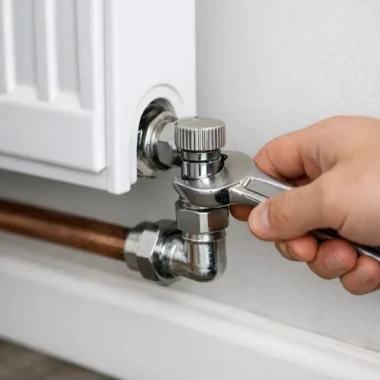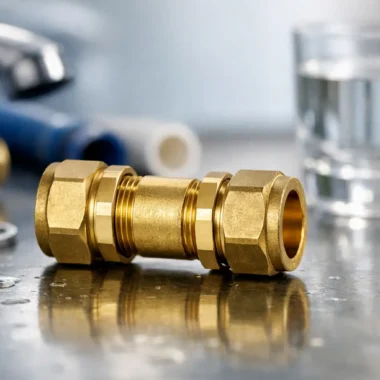

If you have ever had to connect or replace a water meter, gas meter, or a metered valve assembly, you have probably come across the question: what is a meter union? It is one of those fittings that gets specified by name on site, but for anyone ordering parts quickly, the detail matters. Get the wrong union and the job stops.
A meter union is a detachable threaded fitting designed to join a meter or meter tail to pipework, valve bodies, or associated connections. Unlike a standard coupling, it allows you to make a secure connection that can also be undone for servicing, meter exchange, inspection, or replacement. In practical terms, it gives you a reliable mechanical joint at a component that may need to come out again later.
What is a meter union used for?
A meter union is mainly used where a meter has to be connected into a system in a way that is both secure and serviceable. That usually means gas and water installations, though the exact fitting style depends on the application, thread type, and sealing arrangement.
On domestic and light commercial work, meter unions are commonly found on gas meter installations and water meter assemblies. They are also used on some valve-to-meter connections and specialist pipework layouts where a removable threaded joint is the most practical option. The key point is that the fitting is designed around access. You are not just joining two pipes permanently – you are connecting to a component that may need to be isolated and removed.
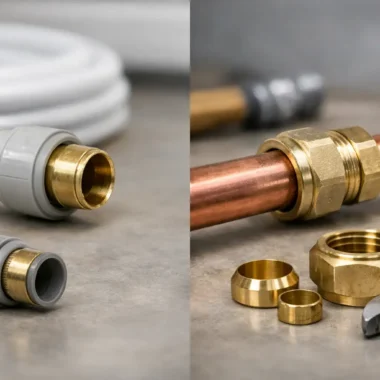
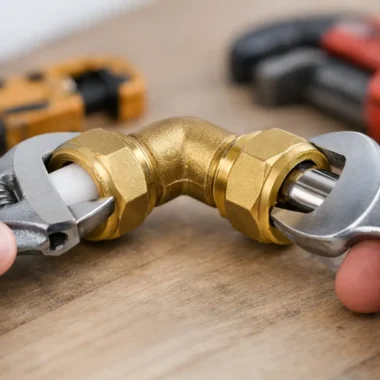
That makes meter unions different from many everyday compression or solder fittings. A compression elbow or coupler is usually there to complete the run. A meter union is there to complete the run while also allowing future disconnection without cutting back pipework.
How a meter union works
Most meter unions consist of two mating parts and a union nut. One end connects to the meter or valve thread, and the other connects to the adjoining pipework or fitting. The nut draws the faces together to create the seal.
Depending on the product, the seal may be formed by a flat face and washer, a cone seating, or a dedicated sealing face built into the fitting design. That detail matters. Not every threaded connection seals on the thread itself. In many meter union arrangements, the thread simply pulls the joint tight while the sealing happens at the mating faces.
This is where ordering errors happen. A fitting may appear to have the same nominal thread size as another, but if the seat type is different, it will not make a proper joint. For trade buyers, that means checking more than just the thread description. You need to know how the fitting seals and what it is intended to mate with.
The parts that make up a meter union
In most cases, a meter union assembly includes a tailpiece or threaded adaptor, a union nut, and either an integral seating face or a separate sealing washer. Some versions are brass, and many are chosen for durability, machinability, and compatibility with standard plumbing and gas installation practice.
You may also see meter unions supplied as straight or angled patterns, though straight is common where the meter position is already fixed and the pipework lines up with the inlet or outlet. Material finish, thread standard, and pressure suitability can vary between products, so the exact specification should always match the intended service.
For anyone buying online, this is why technical naming matters. A meter union is not just a generic union. The size, thread form, end connection, seating type, and service medium all need to line up with the rest of the assembly.
Meter union sizes and thread types
When people ask what is a meter union, what they often really mean is which one do I need? Size and thread identification are usually the deciding factors.
In UK plumbing and heating work, meter unions are often specified using BSP thread sizes, but the nominal size does not always tell the whole story. A 3/4 inch BSP connection, for example, needs to match both the mating thread and the sealing arrangement. Some products are male x female, some are meter thread x compression or pipe connection, and some are designed specifically for standard meter tails and meter bars.
Gas applications are especially sensitive to correct specification. You cannot assume that any threaded brass union with the same apparent diameter will be suitable. Gas fittings need to match the intended appliance or metering component and be installed in line with current regulations and competence requirements.
Water meter unions also vary. Some are intended for potable water systems, some need WRAS approval where required, and some are designed around utility meter patterns rather than general plumbing fittings. If the job involves replacement rather than new installation, checking the existing fitting, thread, and seat is often the quickest route to getting the right part first time.
Meter union vs standard union
A standard union and a meter union both allow a joint to be disconnected, but they are not always interchangeable. A standard pipe union is often selected as a general-purpose demountable fitting in a pipe run. A meter union is more likely to be tied to a specific meter connection pattern, thread type, or face seal.
That difference matters on service calls and replacement work. If you fit a general union where a meter-specific union is required, you may find the thread engages but the faces do not seal correctly, or the assembled length does not suit the installation. Even a small mismatch can cause rework.
So while the terms sound close, the application is more specific with a meter union. It is usually chosen to suit the meter or metered assembly first, and the pipework second.
Where meter unions are commonly found
On gas systems, meter unions are typically used at the point where the gas meter connects into the installation pipework. On water systems, they are used on meter connections where a utility meter or sub-meter is fitted in line. You may also see them in plant rooms, service cupboards, and maintenance settings where access for future removal is part of the design.
For domestic installers, the most familiar examples are replacement gas meter connections and water meter sets. For maintenance contractors, meter unions often come up when dealing with ageing fittings, seized threads, damaged washers, or historic installations where the original pattern needs matching rather than redesigning.
What to check before ordering a meter union
The first thing to confirm is the application – gas or water. After that, check the nominal size, thread type, sealing face, and connection format on the opposite end. If you are replacing an existing fitting, compare the old part carefully rather than relying on a rough measurement from the nut alone.
It is also worth checking whether the fitting is being supplied as a complete union set or as an individual component. Some buyers need only the tail, some need the nut and washer as well, and some need a matched pair. Product descriptions should make that clear, but it is always worth confirming before placing an order on an urgent job.
Material and approvals matter too. On potable water work, approval requirements may apply. On gas work, component suitability is not something to guess at. If the fitting is part of a regulated installation, the right specification is not optional.
Common problems with meter unions
Most problems come down to mismatch, over-tightening, or reusing worn sealing components. A union that looks close enough may thread on but fail to seat properly. A damaged face or flattened washer can also cause leaks even when the fitting appears tight.
Over-tightening is another common issue. Because the seal is often made at the face rather than the thread, excessive force can distort components, damage the washer, or make future disassembly harder. As with many threaded plumbing fittings, correct alignment and clean mating surfaces usually matter more than brute force.
Older installations can add another layer of difficulty. Threads may be worn, components may have mixed standards from previous repairs, and access can be poor. In those cases, accurate identification saves time.
Choosing the right meter union for the job
If you are sourcing parts for a planned install, start with the meter or valve specification. If you are sourcing for a repair, start with the fitting already in place. Either way, the aim is the same – match the connection exactly, including the seat type and any required washer or tailpiece.
For trade buyers and competent DIY customers, a supplier with clear technical naming, size detail, and stock availability makes the process much quicker. That is especially useful on small but critical parts like unions, where one missing or incorrect item can delay the whole install. Mepstock’s range is built around that kind of practical buying – specific fittings, clear product detail, and fast access to parts that need to fit first time.
If you are still asking what is a meter union, the shortest answer is this: it is a serviceable connection fitting used to join a meter into pipework without making that connection permanent. The longer answer is the one that matters on site – it has to be the right thread, the right seat, and the right application, otherwise it is just another part to return. When the fitting is correct, the job moves on without fuss.