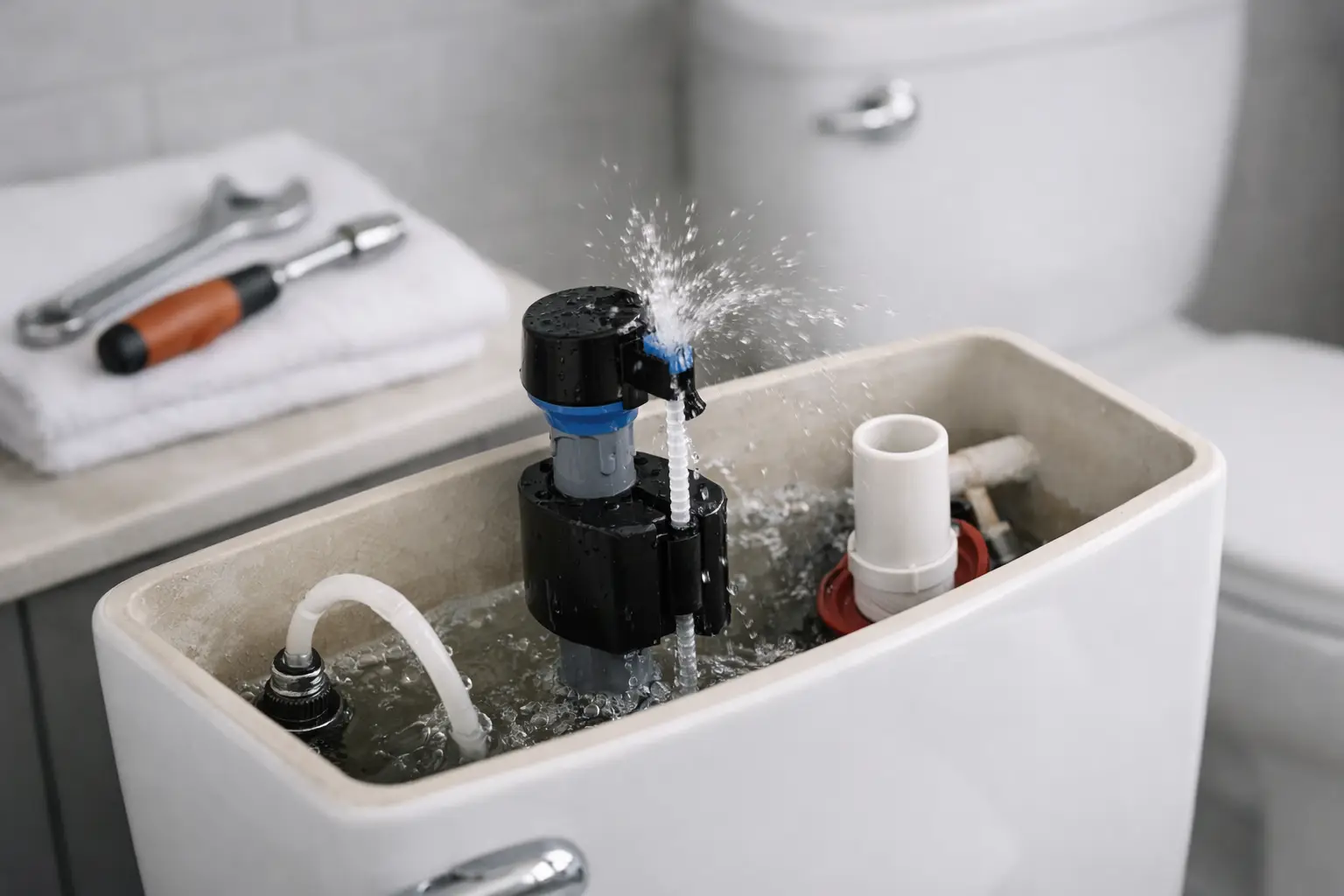
A toilet that suddenly whistles at 6am is rarely a problem you can ignore for long. If you are asking, why is my toilet fill valve noisy, the sound is usually being created as water passes through a restricted, worn or incorrectly set inlet valve. The repair may be as straightforward as clearing debris or changing a seal, but the noise can also point to high incoming pressure or a valve nearing the end of its working life.
The useful starting point is to identify when the noise occurs. A sound during refilling after a flush is generally associated with the fill valve. A noise while the cistern is sitting unused, however, can indicate that the inlet valve is passing water because the flush valve is leaking into the pan.
What type of noise is the fill valve making?
The sound helps narrow down the fault before parts are removed. A high-pitched whistle or squeal normally means water is being forced through a restricted passage, commonly around a deteriorated diaphragm, washer or inlet filter. Hissing can be normal during filling, but a loud or persistent hiss often suggests the same issue or excessive water pressure.
A groaning, vibrating or foghorn-style noise is more often caused by a worn diaphragm or pressure imbalance inside the valve. The vibration may travel through the pipework, making the issue sound more serious than it is. Banging or a sharp knock as the cistern reaches its fill level is usually water hammer. This happens when the valve closes quickly and the moving water in the supply pipe stops abruptly.
Before buying a replacement, remove the cistern lid and flush the toilet. Watch the valve refill. Confirm that the noise starts only when the inlet valve opens, rather than when the flush valve operates or water runs down the overflow.
Common reasons a toilet fill valve becomes noisy
Worn diaphragm, washer or internal seal
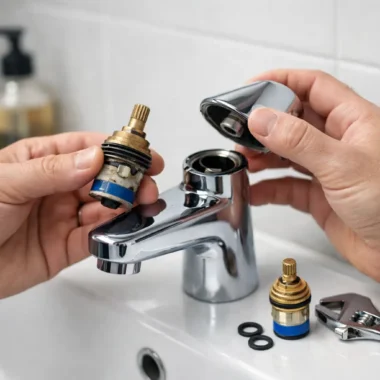
Many UK cistern inlet valves use a diaphragm to control the flow of water. Over time, rubber components can harden, split or lose their shape. Limescale and sediment can also prevent the diaphragm from seating correctly. The valve may then whistle, chatter or take much longer than usual to fill the cistern.
On a serviceable valve, replacing the diaphragm or seal can be a sensible repair. It depends on whether the manufacturer supplies the correct service kit and whether the valve body is still sound. On older, unbranded or heavily scaled valves, fitting a complete replacement is often quicker and more reliable than trying to match internal components.
Dirt in the inlet filter or valve seat
A small amount of grit is enough to create noise. Work on the local water main, debris in old pipework, or scale loosened during maintenance can become trapped at the inlet filter or valve seat. The restriction increases water velocity and produces a whistle or hiss.
Isolate the toilet supply, flush the cistern and follow the valve manufacturer’s instructions to access the filter or cap. Rinse removable filters with clean water and check for damaged mesh. Do not force metal tools into a plastic valve seat, as a scratch can stop the valve sealing properly afterwards.
High mains water pressure
A fill valve can be in good condition and still be noisy if the incoming pressure is too high. This is more likely where pressure is boosted, where a property is supplied from a high-pressure main, or when the sound is affecting several outlets. A noisy valve may be the first obvious symptom, particularly in a quiet bathroom.
High pressure also puts unnecessary strain on flexible tap connectors, appliance hoses, float valves and other working parts. If pressure appears excessive throughout the property, the proper fix is investigation at the incoming supply and, where required, a correctly specified pressure-reducing valve. Changing the toilet valve alone may reduce the sound but does not resolve the underlying cause.
Incorrect float adjustment or an obstructed float
The float tells the valve when to close. If it catches on the cistern wall, rubs against a cable, or is set too high, the valve may struggle to shut off cleanly. A partially open valve can hiss continuously and allow water to run into the overflow.
Check that the float moves freely through its full travel. The final water level should sit below the top of the internal overflow tube, following the cistern or valve instructions. Avoid bending float arms aggressively or forcing adjustment screws beyond their intended range. A damaged float mechanism is usually best replaced.
A faulty flush valve masquerading as a fill valve fault
If water is quietly leaking from the cistern into the pan, the fill valve will top the cistern up every few minutes. This can create intermittent hissing even when nobody has flushed. Put a few drops of food colouring in the cistern and wait without flushing. If colour appears in the pan, the flush valve seal is passing and needs attention.
This distinction matters. Replacing a perfectly functional inlet valve will not stop a noisy refill caused by a leaking flush valve.
How to check a noisy toilet fill valve safely
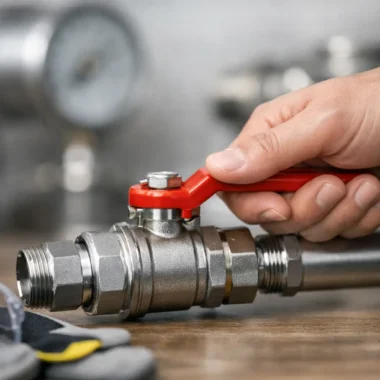
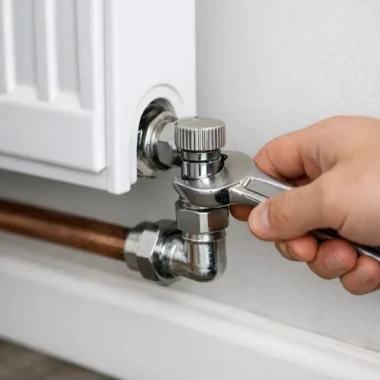
Start by locating the isolation valve on the toilet supply pipe. Turn it clockwise carefully until the water stops, then flush the cistern to lower the water level. If there is no local isolation valve, use the internal stopcock and make sure everyone in the property knows the water is temporarily off.
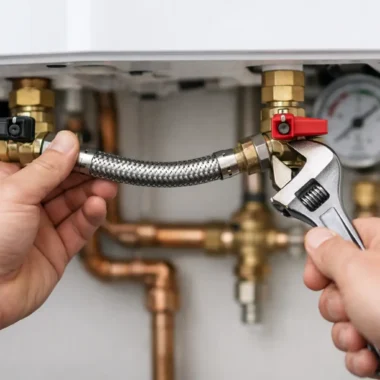
With the lid removed, inspect the valve for obvious scale, a loose cap, a damaged float, or water spraying from a joint. Check the flexible connector and isolation valve as well. A noise that seems to come from the cistern can sometimes be pipe vibration at the supply connection.
When reassembling a valve, use the correct seal and do not overtighten plastic threads or retaining nuts. Hand-tightening followed by a small additional adjustment is commonly sufficient, but always follow the fitting instructions. Once the water is restored, inspect every disturbed connection for leaks and allow the cistern to complete several fill cycles.
When cleaning is enough and when replacement makes sense
Cleaning is worth trying where the valve is relatively new, the fault began suddenly, and there is visible debris at the filter or diaphragm. A replacement diaphragm can also be cost-effective if it is an identifiable, compatible part and the valve has not become brittle or heavily scaled.
Replacement is the better option when the valve is old, noisy after cleaning, slow to shut off, cracked, difficult to source parts for, or repeatedly causing problems. For most modern close-coupled toilets, a suitable bottom-entry or side-entry fill valve must match the cistern inlet position, connection size, available clearance and operating water pressure. Measure before ordering rather than relying on appearance alone.
For a trade repair, it is usually worth replacing suspect isolation valves or perished fibre washers at the same time if they are being disturbed and show signs of age. That avoids returning to a minor leak after the cistern repair is complete. Select components intended for potable water use, and check the required approvals where the installation calls for them.
Dealing with water hammer and pipe vibration
If the fill valve is quiet until it closes, then produces a bang through the pipework, look beyond the valve itself. Pipe clips may be loose, unsupported copper may be moving in a void, or the incoming pressure may be high. Securing accessible pipework can reduce the noise substantially.
A valve that closes more gradually may also help, but this is not a substitute for correcting excessive pressure or poorly supported pipework. Where banging is severe, affects multiple fittings, or follows work on a mains supply, a plumber should assess the system. Repeated water hammer can damage valves and joints over time.
When to call a plumber
A competent DIY repair is realistic when the cistern has an accessible isolation valve and the issue is clearly a replaceable fill valve, seal or filter. Call a plumber if the cistern cannot be isolated, the water pressure is suspected to be excessive, the pipework is vibrating inside walls or floors, or the toilet continues to overflow after adjustment.
A noisy fill valve is often a small maintenance job, but it should be treated as a useful warning rather than background noise. Identify the sound, check whether the cistern is actually leaking into the pan, and fit a compatible replacement where cleaning or servicing will not give a dependable result.