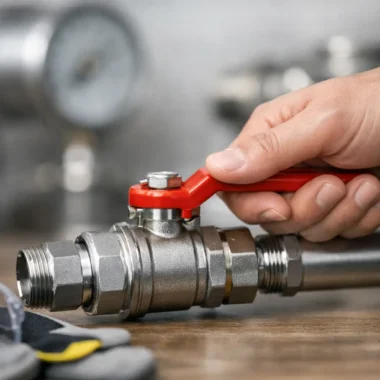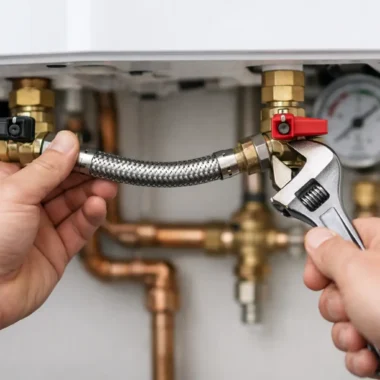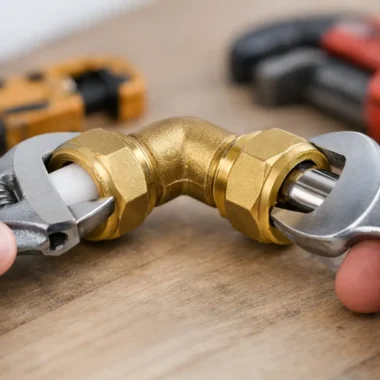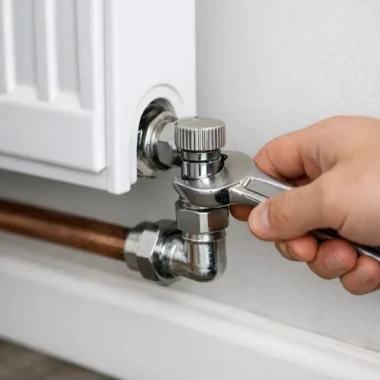
A washing machine hose loses pressure, a pump stops, or a cold feed is isolated for maintenance. In each case, water can attempt to travel in the wrong direction. So, do check valves stop backflow? Yes – a correctly selected and installed check valve is designed to stop reverse flow. But that does not mean every check valve provides the level of backflow protection required for every installation.
For most plumbing jobs, the practical question is not simply whether to fit a non-return valve. It is which valve type is suitable for the fluid risk, pipe size, flow direction, pressure conditions and applicable Water Supply (Water Fittings) Regulations.
Do check valves stop backflow in all situations?
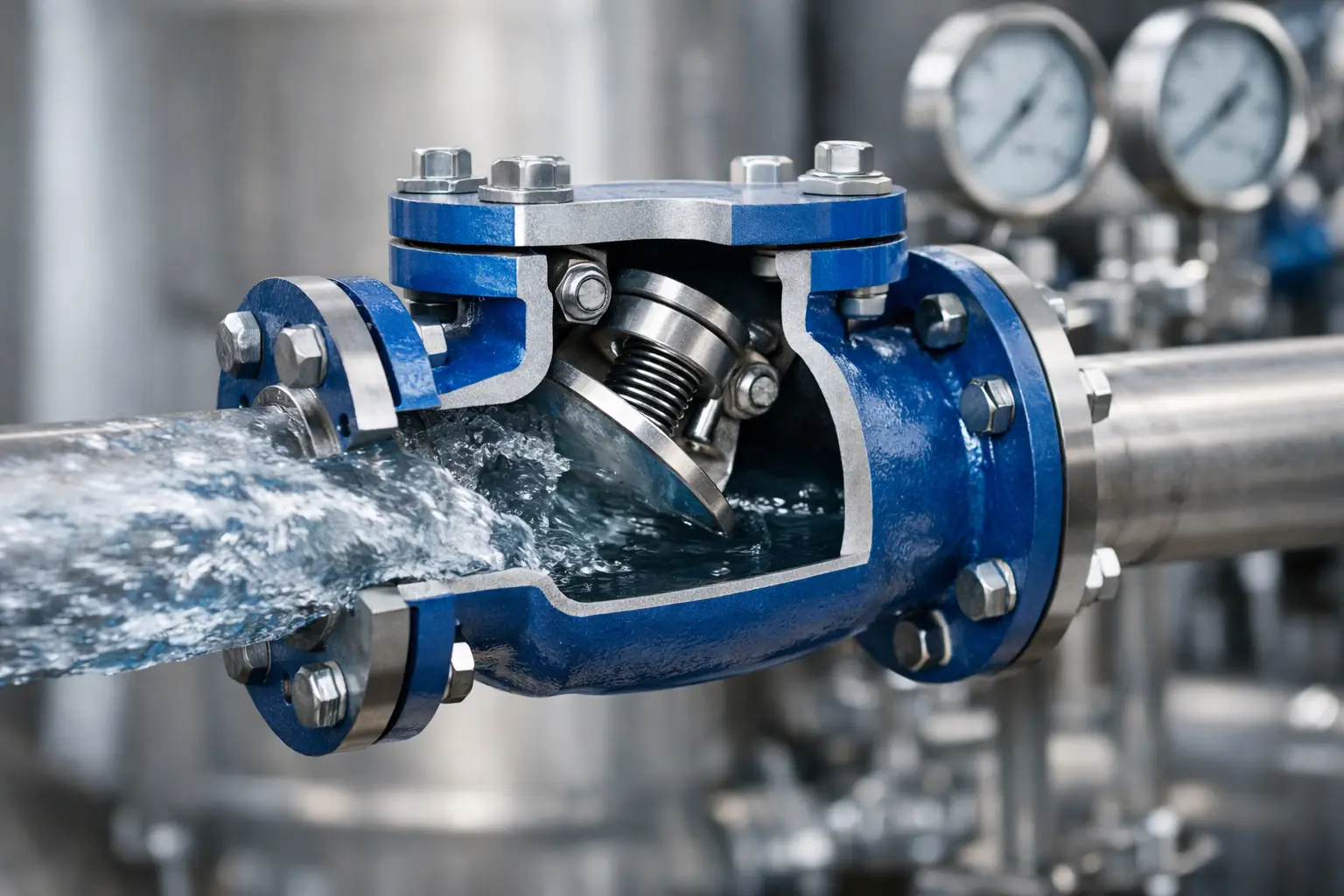
A check valve, also called a non-return valve, opens when water flows in its intended direction and closes when the pressure reverses. It can be spring-loaded, use a swinging flap, or rely on a poppet and seat arrangement. Once downstream pressure becomes higher than upstream pressure, the valve is intended to shut and prevent water returning into the supply.
That makes check valves useful on many domestic and commercial systems. They are commonly fitted on pump discharge lines, appliance supplies, heating circuits, boosted cold-water systems and pipework where separate supplies must not cross-feed.
However, a check valve is a mechanical component, not a guarantee against every contamination risk. It can wear, foul with debris, stick partially open or leak across the seat. More importantly, a single check valve may not meet the required backflow protection level where there is a higher risk of contaminated water entering wholesome water pipework.
The correct answer is therefore: check valves stop ordinary reverse flow when working properly, but higher-risk applications may need a double check valve, an air gap, a reduced pressure zone device or another recognised backflow prevention arrangement.
Reverse flow is not always the same as backflow protection
Reverse flow can occur through back pressure or back siphonage. Back pressure happens when pressure downstream becomes greater than the incoming mains pressure. A booster pump, elevated pipework or a heating system can create these conditions. Back siphonage occurs when the supply pressure drops, potentially drawing water back towards the mains – for example, during a burst main or heavy demand elsewhere on the network.
A non-return valve addresses the direction of flow. A compliant backflow prevention device addresses both flow direction and the consequence if contaminated water is drawn back into the potable supply.
This distinction matters around appliances, hose connections, chemical dosing, commercial equipment, irrigation, heating systems and any outlet that could contact non-wholesome water. The more severe the possible contamination, the stronger the protection required.
Under UK water fitting requirements, protection is assessed using fluid categories. Water posing no health risk is treated differently from water containing substances that could create a health hazard. A single check valve may be acceptable for low-risk situations, while installations involving higher fluid categories require more substantial protection. Do not select a valve based on thread size alone.
When a single check valve is usually appropriate
A single spring check valve is often used where the aim is to prevent nuisance reverse flow or maintain correct system operation. Typical examples include protecting a pump from reverse rotation, preventing an unwanted cross-flow between hot and cold supplies, or stopping a pressurised branch from feeding back into another branch.
For potable water work, use a valve suitable for the application and check that it has the necessary approval where required. WRAS approval is often a key specification point for products installed on wholesome water services. It confirms that a product has been assessed for compliance with the relevant requirements, but it does not remove the need to select the right protection arrangement for the installation.
Spring-loaded valves are normally the practical choice where the valve must operate in a vertical line, where quick closing is needed, or where a swing check valve would not sit correctly. The spring introduces a cracking pressure and a small pressure loss, though. On low-pressure gravity-fed pipework, that restriction can matter.
When a check valve alone is not enough
A single check valve should not be treated as a universal answer to backflow. If there is a credible route for contaminated water to reach the drinking-water supply, assess the fluid category and use the method specified for that risk.
A double check valve provides two independent check valves in series and offers a higher level of security than one valve alone. It is regularly used where a single check valve does not provide sufficient protection, subject to the installation conditions and the relevant water regulations. It is still a mechanical arrangement and needs to be accessible for inspection and replacement.
For higher-risk applications, a double check valve may not be acceptable. An appropriate air gap is often the preferred solution where practical because there is a physical separation between the water outlet and the receiving vessel. Reduced pressure zone valves are used in certain higher-risk commercial applications, but they require correct installation, discharge provision and ongoing testing by a competent person.
Take particular care with:
- outside taps and hose connections, especially where hoses may be left in ponds, drains, buckets or chemical containers;
- filling loops, heating circuits and systems containing inhibitor or glycol;
- commercial washdown, catering, laboratory and process equipment;
- irrigation systems, chemical dosing equipment and rainwater or greywater connections.
The device that is suitable for a washing machine connection may not be suitable for a hose-fed chemical sprayer. The risk comes from what the outlet can contact, not just what normally flows through the pipe.
Selecting the right non-return valve for the job
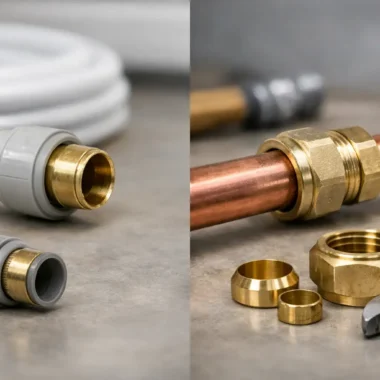
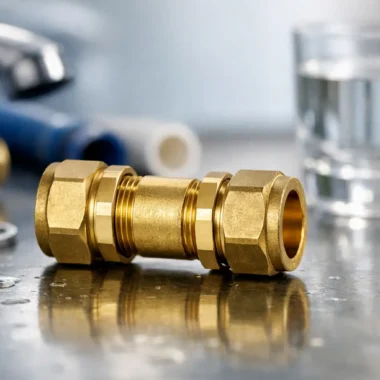
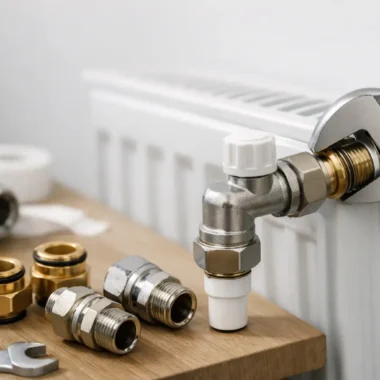
Start with the connection. Compression, threaded BSP, push-fit and press-fit valves all have their place, but the valve must match the existing pipe material, size and connection method. Brass-bodied threaded valves are common for serviceable connections, while inline compression check valves can be convenient on copper pipework. For press systems, use a compatible press fitting and the correct jaw profile.
Then check the operating conditions. Look at the maximum working pressure, temperature range and stated flow direction. A valve used on a hot-water or heating circuit must be rated for the expected temperature. A standard potable-water valve may not be suitable for aggressive fluids, glycol concentrations or high-temperature plant room duties.
Valve orientation also affects performance. Many spring check valves can be installed horizontally or vertically, provided the flow follows the body arrow. Swing check valves generally need more careful positioning so gravity can help the disc close. Always follow the manufacturer’s installation guidance rather than assuming every valve can be fitted in any direction.
Consider pressure loss as well. Every check valve adds resistance. On a mains-pressure branch this is often modest, but it can reduce performance on gravity-fed supplies, low-output pumps and outlets where flow is already marginal. A full-bore valve may be preferable where flow rate is critical.
Installation details that prevent call-backs
Fit the valve with the flow arrow pointing towards the outlet or downstream system. This is basic, but an incorrectly fitted non-return valve can completely block the supply and waste time on fault-finding.
Keep the valve accessible. A check valve hidden behind tiled boxing or buried below a floor without access may be difficult to inspect when it begins passing water or becomes restricted. Where maintenance is likely, isolation valves either side can make replacement quicker without draining a larger section of the system.
Flush new or altered pipework before final commissioning where possible. Solder debris, PTFE tape, scale and swarf can prevent the internal seal from seating correctly. Avoid overheating valves during soldering, and support pipework so the valve body is not under mechanical strain.
After installation, test in normal operation and under the conditions that could create reverse flow. On a pump system, check what happens when the pump stops. On mixed supplies, isolate one side and confirm that no cross-flow reaches the other. A valve can look correctly installed yet still leak due to debris, damage or inadequate closing pressure.
Common signs a check valve is passing
Unexpected pressure changes, a warm cold-water pipe, a pumped system slowly draining back, or water movement through an isolated branch can all indicate a faulty or incorrectly selected check valve. In heating and appliance work, complaints of intermittent temperature changes may also point to hot and cold cross-flow through a failed non-return valve.
Before replacing it, confirm the direction of flow and check whether another connection is causing the issue. A check valve may be blamed when the actual fault is a failed mixer cartridge, a stuck filling loop valve or an incorrectly arranged bypass.
If replacement is needed, match the original connection type and verify that the new valve meets the required pressure, temperature and backflow protection duty. A cheaper valve that is not rated for the system usually creates a second visit.
For any potable-water installation, specify the protection level before ordering the fitting. A correctly sized check valve is excellent at stopping reverse flow, but the right backflow solution is the one that protects the supply as well as keeping the system running properly.