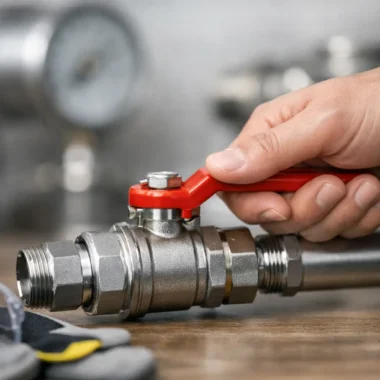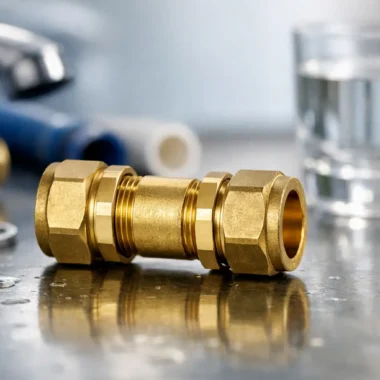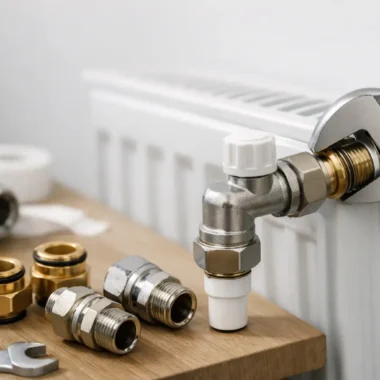
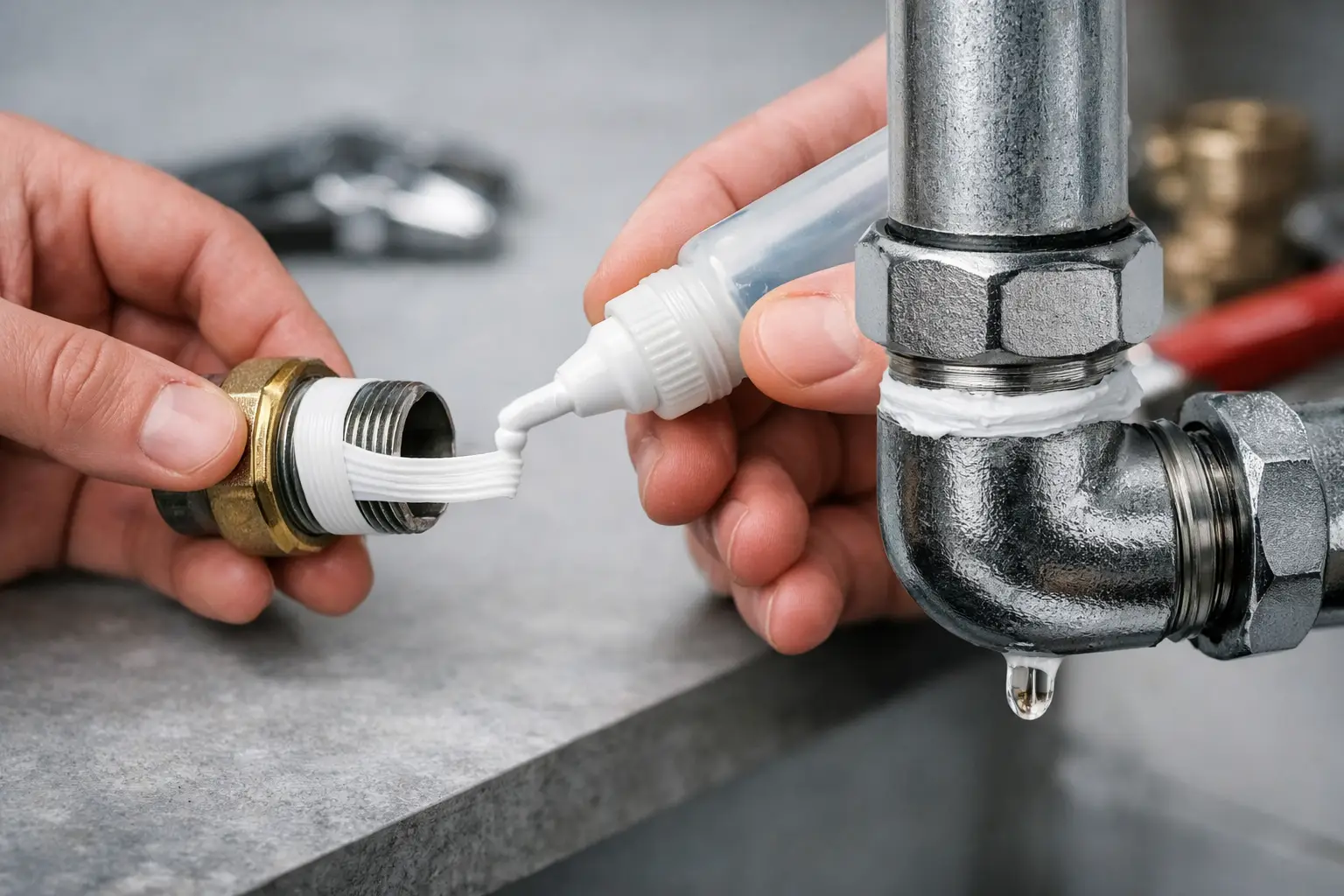
A threaded fitting can feel tight and still leak. The usual cause is not the fitting itself, but using the wrong sealing method for the thread type, applying too much material, or tightening past the point where brass or plastic starts to distort. Knowing how to seal threaded joints properly saves return visits, wasted fittings and the frustration of finding a slow drip after the system has been commissioned.
The first rule is simple: threads do not all seal in the same way. Before reaching for PTFE tape or compound, establish whether the joint is designed to seal on the threads, on a washer, or on a machined face.
Identify how the fitting is meant to seal
Most threaded plumbing connections found on UK water systems use BSP threads. A tapered male thread, commonly BSPT, is designed to tighten progressively into a matching threaded fitting and can be sealed on the thread. A parallel BSP thread, commonly BSPP, often relies on a washer, O-ring or flat sealing face instead.
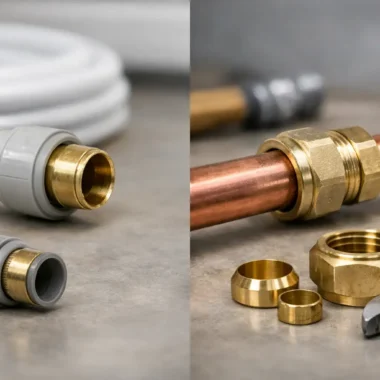
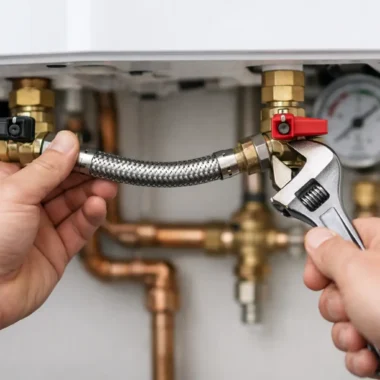
This distinction matters. A hose union, tap connector, flexible hose and many appliance connections have a female swivel nut with a rubber washer inside. The thread only pulls the washer onto its seat. Adding PTFE tape to that thread will not improve the seal and may stop the nut from tightening correctly.
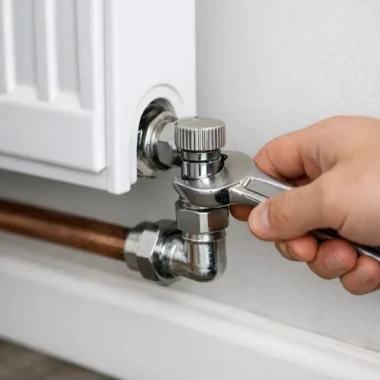
The same applies to compression fittings, radiator tails with union connections, and many valves with captive nuts. Look for the sealing washer, olive or cone first. If it is present, make sure the sealing face is clean and the washer is in good condition rather than trying to seal the threads.
For threaded brass fittings, nipples, elbows, tees and reducing bushes that seal through tapered engagement, select a thread sealant suited to the application and fitting material.
Choose the right thread sealant
PTFE tape, jointing compound and anaerobic liquid sealants all have a place. There is no single best option for every job.
PTFE tape is widely used because it is clean, inexpensive and suitable for many water fittings. It helps fill the small gaps between mating threads while allowing the fitting to tighten smoothly. Use a quality tape intended for plumbing work, rather than thin general-purpose tape that tears or bunches during installation.
Jointing compound can be used on its own where appropriate, or over PTFE tape where an installer wants additional lubrication and gap filling. It is particularly useful on larger threaded connections and can make future dismantling easier. Check the product specification before use, especially for potable water, heating inhibitor, oil or gas service.
Anaerobic thread sealant cures in the absence of air between metal threads. It provides a clean, professional seal and is useful where fitting orientation matters, such as a wall-mounted elbow or gauge connection. It is generally intended for metal-to-metal threaded joints, so it is not the default choice for plastic threads or connections with a washer seal.
For potable water installations, use products suitable for drinking water applications. Where a fitting or valve needs WRAS approval, the full assembly and the materials used should remain appropriate for that application. On gas pipework, sealing compounds and tapes must be approved for gas use, and work on gas installations must be carried out by a Gas Safe registered engineer.
How to seal threaded joints with PTFE tape
PTFE tape is straightforward to apply, but direction and coverage are critical. If the tape is wrapped the wrong way, it unwinds as the fitting is tightened and can leave the thread almost bare.
Start with clean, dry threads. Remove old tape, hardened compound, dirt and burrs with a suitable brush or cloth. Damaged threads should be replaced rather than forced together. A cross-threaded brass fitting may tighten, but it is unlikely to give a dependable seal.
Hold the male fitting with the threaded end facing you. Begin one thread back from the end so no tape can enter the pipework. Wrap the tape clockwise, following the direction the fitting will turn when tightened. Keep light tension on the tape and press it into the thread profile as you work.
The exact number of wraps depends on tape thickness, thread size and the fit of the components. As a practical starting point, use around six to ten neat wraps on a typical small brass threaded fitting. Larger or looser threads may need more, but excessive tape can prevent full engagement or split a female brass fitting when tightened.
Once wrapped, smooth the tape into the threads with your fingers. The profile should still be visible. If the tape has formed a thick white collar around the fitting, remove it and start again with fewer, tighter wraps.
Thread the fitting together by hand first. It should engage cleanly for several turns. If it jams immediately, stop and check the thread type and alignment. Use the correct spanner only once the connection is hand-tight, supporting the opposing fitting or valve body to avoid transferring strain into pipework.
When compound or anaerobic sealant is the better choice
Threaded joints sometimes need a degree of positional adjustment. A brass elbow may need to finish facing squarely upwards, or a tee may need to align with an existing run. PTFE tape can work well, but backing a tapered fitting off after tightening may compromise the seal.
A suitable jointing compound can provide lubrication and help the joint seat without tearing tape. Some installers apply a thin smear over correctly applied PTFE tape for larger brass threads. The key word is thin. Excess compound can be pushed into the system, particularly on small-bore pipework, and can contaminate strainers, cartridges or valve seats.
Anaerobic sealant is often the cleaner option for fixed metal assemblies. Apply it evenly to the male thread, avoiding the first thread at the end. Assemble promptly, tighten to the required orientation and allow the stated cure time before pressure testing where the manufacturer requires it. Do not assume every liquid sealant works on every metal, temperature range or fluid. Always check compatibility with brass, steel, stainless steel, glycol mixtures and the intended service.
Tighten for the seal, not for maximum force
Overtightening is one of the most common causes of failed threaded joints. Brass is relatively soft, and female threaded fittings can split if a taper is driven in too far. Plastic female fittings are more vulnerable still and should only be tightened to the manufacturer’s guidance.
Tighten the connection until it is firm and correctly orientated, then test it. There is no reliable number of turns because thread tolerances, sealant type and fitting combinations vary. If a joint leaks, do not simply apply more force. Depressurise the system, dismantle it, inspect the threads and reseal it correctly.
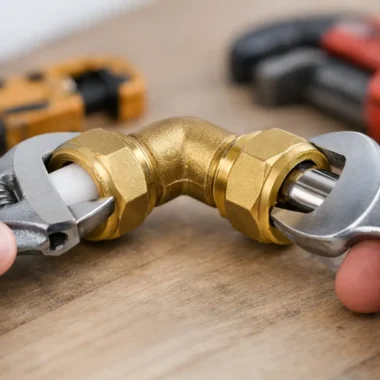
Use two spanners where possible: one to turn the fitting and one to hold the valve, manifold, pump connection or appliance point steady. This prevents twisting copper tube, stressing soldered joints or damaging a mounted component.
Common mistakes that cause leaks
The quickest way to create a leak is treating every threaded connection as a PTFE job. Washers, cones and olives need clean seating surfaces, not tape on the nut. Another common fault is wrapping tape anti-clockwise, which allows it to peel off during assembly.
Using too much tape is just as problematic as using too little. It can make a fitting feel tight before the threads have engaged properly, distort the female fitting or leave fragments inside the line. Starting tape on the first thread can also introduce loose material into filters, mixers and valves.
Mixing incompatible threads is a separate issue that sealant cannot fix. BSP, BSPT, BSPP, metric and NPT threads are not interchangeable simply because they appear close in size. Confirm the thread form, nominal size and whether the connection seals on the thread or a face before ordering replacement parts.
Test before the job is closed
For water pipework, pressurise the system gradually and inspect every new connection under normal operating pressure. Dry the joint first, then run a tissue around it after a few minutes. A faint weep can be easier to find this way than by looking at a wet fitting.
On heating systems, check again once the system has warmed up and cooled down. Temperature changes can expose a marginal joint, particularly around boiler connections, pumps and radiator valves. For gas work, use the required tightness testing procedure and appropriate leak detection methods carried out by a competent, Gas Safe registered engineer.
A correctly sealed threaded joint starts with the right fitting and ends with a proper test. Choose the sealant for the connection, keep the threads clean, and resist the temptation to solve a leak with extra tape or extra force.