
If a job is held up by one small part, it is often one of the brass fittings. A valve tails mismatch, the wrong thread, a compression end where a male iron should be – these are the details that turn a quick install into a return visit. For plumbers, heating engineers and maintenance buyers, getting the fitting right first time is less about theory and more about thread type, application, pressure, approval and stock availability.
Why brass fittings are used so widely
Brass remains a standard material across domestic and light commercial plumbing because it balances strength, machinability and corrosion resistance well. It is suitable for a wide range of water applications, and many products are also used within heating systems and selected gas installations where the fitting is specifically rated for that duty.
That does not mean every brass component does every job. Some are intended for potable water, some for sealed heating circuits, some for appliance connections, and some for gas. The material may be brass in each case, but the design, sealing method and approvals are what determine whether the part is suitable.
In practical terms, brass is popular because it threads cleanly, holds form under tightening better than many lighter materials, and is available in the connection patterns installers use every day. Elbows, tees, couplers, hex nipples, reducing bushes, tap connectors, unions, stop ends and adaptor pieces all exist in brass because the material lends itself to precise connection work.
Common types of brass fittings
For most buyers, the starting point is not the material but the end connection. That is usually what decides compatibility.
Threaded brass fittings
Threaded fittings are common where components need to screw into valves, pumps, cylinders, taps, manifolds or legacy pipework. You will usually be dealing with male and female threads in BSP form, either parallel or tapered depending on the product and application.
This is where many ordering mistakes happen. A 15mm compression x 1/2 inch male iron fitting and a 1/2 inch male x female straight connector may both involve the same nominal thread size, but they solve completely different connection problems. One bridges pipe to thread. The other extends or adapts an existing threaded point.
Compression brass fittings
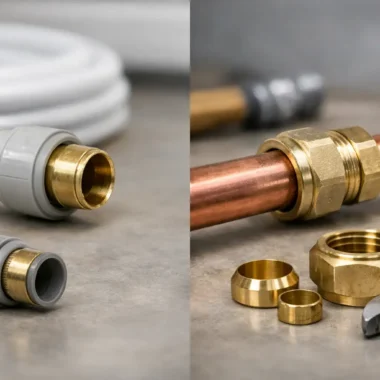
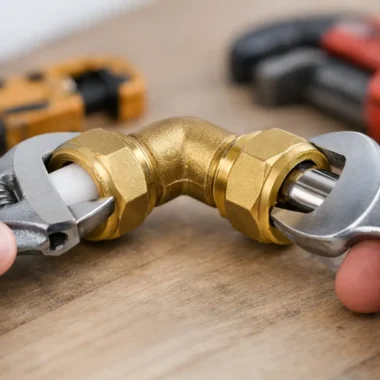
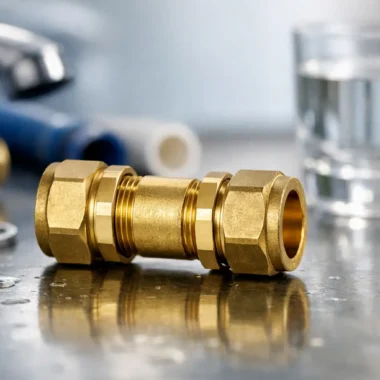
Compression fittings are widely used on copper tube and remain a go-to choice for repairs, alterations and accessible installation work. They are straightforward, require no heat, and suit jobs where draining down and getting a clean joint quickly matters more than reducing fitting cost by a few pence.
They do, however, depend on correct olive compression and clean pipe preparation. Overtightening can distort the fitting or damage the sealing surface, while undertightening leaves movement in the joint. On old pipe, surface condition matters as much as the fitting itself.
Push-fit and press transition components
Brass is also used within transition pieces and specialist adaptors for broader system connections. In these cases the brass section often provides the threaded or valve interface, while the opposite end may suit another jointing method. These parts are useful, but only if the whole assembly matches the pipe system in use.
Brass fittings for water, heating and gas
One of the most important checks is application. A fitting that is physically compatible is not automatically suitable for service conditions.
Potable water and WRAS considerations
Where the fitting is being used on wholesome water, approval matters. Many buyers will look specifically for WRAS-approved products because that removes uncertainty and keeps the specification aligned with UK requirements. On domestic jobs, this is particularly relevant for anything tied into drinking water supplies, taps, appliances and cold water distribution.
Heating circuits
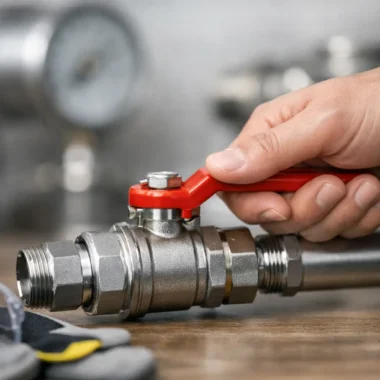
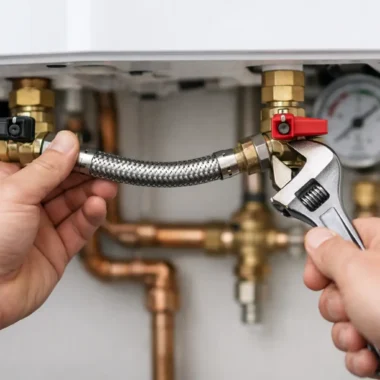
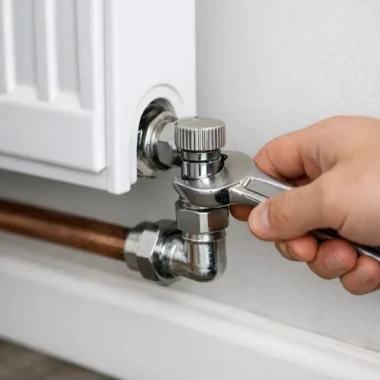
Heating system brass fittings are common on radiator valves, pump sets, filling loops, boiler connections and isolation points. Temperature and pressure performance matter here, but so does serviceability. A fitting that is easy to isolate, disconnect or replace without disturbing half the system has real value on maintenance work.
Gas applications
Gas is where assumptions cause the biggest problems. Only use brass fittings that are clearly intended and approved for gas duty. The fact that a fitting is brass and threaded does not make it acceptable on a gas installation. Jointing method, standard, sealing arrangement and product approval all need to be correct.
Getting sizes right
Size confusion is still one of the biggest reasons for wrong orders. In UK plumbing, metric pipe sizes, imperial thread names and nominal valve connections often appear on the same product page. That is normal, but it means you need to check each side of the fitting separately.
A 15mm x 1/2 inch fitting is not ambiguous once you break it down. The 15mm side refers to the tube connection. The 1/2 inch side refers to the threaded connection. Whether that thread is male or female, parallel or tapered, and whether it seals on the thread or via a washer is the next question.
Reducing fittings need similar care. A 22mm x 15mm reducer is simple enough on tube, but a reducing bush in threaded brass can change both the size and the position of the sealing face. On compact installs, that detail matters.
If you are replacing an existing part, it is often quicker to identify by function first, then confirm dimensions. For example, a radiator valve tail, a cistern connector and a washing machine tee may all involve common nominal sizes, but they are not interchangeable products.
What to check before buying brass fittings
The fastest way to avoid a wrong part is to work through the fitting as a connection problem rather than a material choice. Start with what it is joining, then how it seals, then whether it is approved for the medium.
Thread standard should be checked before anything else on threaded items. BSP is common, but you still need to know whether you are working with a parallel or taper thread and whether the seal is made with thread sealant, a bonded washer, a flat washer or a compression face.
After that, look at pressure and temperature rating. A fitting on a cold mains branch is not dealing with the same conditions as one mounted near a boiler or inside a sealed heating system. Then check approval, especially for potable water or gas. Finally, consider access. Compression may be the practical choice on a maintenance job, while a different system may suit first-fix work better.
Where brass fittings save time – and where they do not
Brass fittings earn their place because they are versatile and familiar. For service engineers and installers carrying van stock, that matters. A sensible range of couplers, elbows, nipples, reducing sets and appliance connectors can solve a lot of site issues without waiting on special order items.
Even so, brass is not always the cheapest route for every run or every system. On larger planned installs, system-based plastic or press solutions may be quicker overall, especially where labour saving outweighs unit price. Brass tends to come into its own at connection points, transitions, valves, final fixes and repair work where precision and adaptability are more valuable than speed across long pipe runs.
There is also a finish issue to consider. Some brass fittings are left plain, others plated or treated for a particular environment or visual finish. In exposed locations, appearance may matter. In concealed service areas, specification usually comes first.
Stocking the right brass fittings for repeat jobs
For trade buyers, the sensible approach is to stock the fittings that solve the most common call-backs and connection changes. That usually means straight connectors, elbows, tees, tap tails, radiator tails, reducing adaptors, stop ends, compression couplers, hex nipples and a core range of male and female threaded pieces in the sizes used every week.
The gain is not just convenience. It cuts downtime between diagnosis and repair. When you can match a failed connection quickly and finish the job without a second supplier stop, margins look better and customers notice the difference.
This is where a specialist supplier such as Mepstock fits the way trade buyers work. Clear product naming, technical sizing, stock depth and UK delivery all matter more than sales language when the job depends on one fitting arriving on time.
Brass fittings and long-term reliability
A reliable joint depends on the whole installation, not just the fitting. Correct pipe preparation, proper alignment, suitable sealant, appropriate tightening torque and application-matched components all affect outcome. Brass gives you a dependable base, but it will not compensate for crossed threads, damaged olives or the wrong sealing method.
That is why the best buying decision is usually the least dramatic one. Choose the fitting that matches the pipe, the medium, the approval requirement and the available access. If the product description gives clear dimensions and connection detail, you are already reducing the chance of leaks, wasted time and unnecessary returns.
When the system is only as good as its smallest connection point, selecting brass fittings properly is not overthinking – it is just good installation practice.