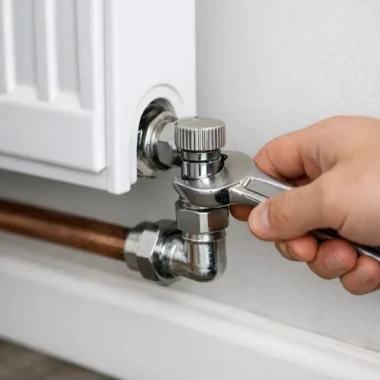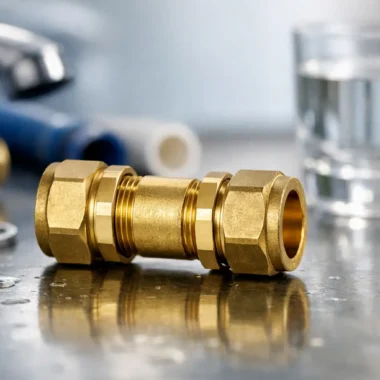
When a heating system starts banging, cycling badly or struggling for flow with TRVs closing down across the property, the automatic bypass valve purpose stops being a theory question and becomes a fault-finding one. In most sealed domestic heating systems, it is there to maintain minimum water flow when the normal circuit starts to shut off.
That sounds simple, but it matters for boiler protection, pump performance and overall system stability. If you are sizing, replacing or diagnosing one, the detail matters – not just whether a bypass valve is fitted, but whether it is set correctly and suited to the system layout.
What is an automatic bypass valve?
An automatic bypass valve, usually shortened to ABV, is a pressure-operated valve fitted between the flow and return pipework of a heating circuit. It opens when the differential pressure across the system rises above its set point.
In practice, that pressure rise usually happens when motorised valves close, thermostatic radiator valves begin shutting down, or parts of the heating circuit stop calling for heat. Instead of forcing the pump against a closing system, the ABV opens and allows water to circulate through a shorter route from flow to return.
It is not there to heat the property directly. Its job is to protect circulation conditions when the rest of the circuit restricts flow.
Automatic bypass valve purpose in a heating system
The main automatic bypass valve purpose is to maintain a safe and stable flow path through the boiler and pump when system resistance increases. Modern boilers and circulators are designed to work within certain flow conditions. If too many valves close and there is nowhere for the water to go, pressure rises and flow can drop away at the boiler.
That leads to several common problems. The pump may become noisy as it works against excessive resistance. The boiler may overheat locally and cycle on limit. You can also get velocity noise at valves and pipework because the remaining open routes are carrying too much pressure.
By opening only when needed, the ABV gives the system somewhere to circulate. That helps prevent pump strain, supports boiler heat dissipation and reduces the chance of nuisance operation.
On systems with thermostatic radiator valves on most emitters, this becomes even more important. As rooms reach temperature, TRVs close progressively. Without an adequate bypass route, the pump can be left trying to push against a system that has effectively shut itself down.
Why boilers often need one
Many boiler manufacturers specify a bypass arrangement to ensure minimum flow through the heat exchanger. Some boilers have an internal bypass built in, while others rely on an external automatic bypass valve in the system pipework.
That distinction matters. An internal bypass may provide boiler protection, but it does not always solve wider system issues such as pump noise or high differential pressure across radiator valves. An external ABV is often used to control those conditions more effectively across the heating circuit.
On S-plan and Y-plan systems, where motorised valves can isolate parts of the circuit, a bypass becomes even more relevant. If zone valves close quickly while the pump is still running, pressure rises sharply. The ABV gives that pressure a controlled release path.
It is worth checking the boiler instructions rather than assuming. Fitting one where it is not needed can reduce system efficiency. Leaving one out where it is required can create operating faults from day one.
How an automatic bypass valve works
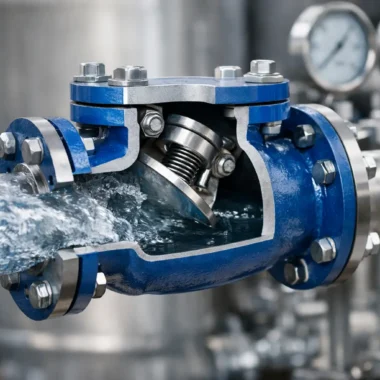
Inside the valve is a spring-loaded mechanism adjusted to a chosen pressure setting. When the pressure difference between the flow and return exceeds that setting, the valve starts to open. As pressure drops again, it closes back down.
The useful part is that it operates automatically and proportionally. It does not act like a simple on-off shut-off valve. If only a small amount of bypass flow is needed, it opens slightly. If more of the system closes down and differential pressure rises further, it opens more.
That makes it better suited than a fixed manual bypass in many modern systems. A permanently open manual bypass can waste heat and reduce performance because water may take the easy route even when the full heating circuit is available. An ABV opens only when the pressure conditions call for it.
Where it is usually fitted
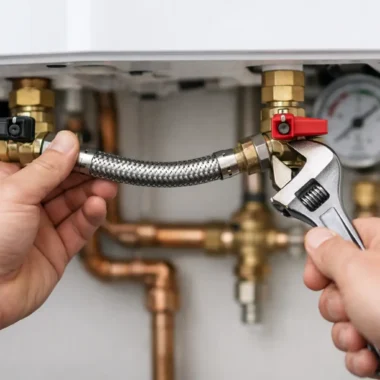
In most domestic installations, the ABV is fitted between the heating flow and return, typically near the boiler. The exact position depends on the boiler instructions and system design, but the aim is the same – provide a controlled bypass path that protects the boiler and pump.
It should be installed where it can sense the relevant pressure difference properly and where future adjustment is practical. Hiding it where nobody can reach the setting cap is not ideal, especially when commissioning or fault-finding.
Direction of flow and valve orientation also matter. Like many specialist valves and fittings, it only works as intended if installed to the manufacturer’s markings and system layout.
Signs the bypass valve is doing its job – or not
A correctly set ABV is usually quiet and unremarkable. You know it is there more by the problems you do not get than by visible operation.
When the setting is wrong, symptoms start appearing. If it is set too high, the valve may not open soon enough. You can get pump noise, velocity hiss through TRVs, boiler cycling and hot flow pipework with poor circulation through emitters.
If it is set too low, the valve may open too easily. Water then bypasses the heating circuit too readily, returning warm water straight back to the boiler instead of moving through radiators. That can reduce heat delivery and encourage inefficient operation.
This is where installers sometimes lose time. The valve itself is not faulty, but the setting does not match the pump head, control arrangement or system resistance. On systems that have had pump upgrades, radiator changes or zoning alterations, the original ABV setting may no longer be right.
Automatic bypass valve purpose versus a manual bypass
A manual bypass is simply a fixed route between flow and return, often controlled by a lockshield or gate valve left partially open. It can provide permanent bypass flow, but it does not respond to changing system conditions.
That is the trade-off. A manual bypass is simple, but simplicity is not always an advantage if the system has variable flow conditions. An automatic bypass valve responds to pressure changes, so it is generally the better option where TRVs, zone valves and modern pumps are involved.
A fixed bypass can be acceptable in some older or simpler layouts, but it needs careful balancing. Too open and it short-circuits the system. Too closed and it may not protect the boiler when circuits shut. The ABV gives more control without constant manual tweaking.
When you should check or replace one
If you are dealing with unexplained boiler overrun issues, pump noise, repeated cycling, or poor heat distribution after controls have been updated, the bypass arrangement is worth checking. The valve may be seized, blocked with debris, fitted in the wrong place or simply adjusted badly.
Older valves can also drift out of useful service. Spring mechanisms wear, scale builds up and adjustment markings become unreliable. On a heating system with a new boiler or circulator, leaving an old suspect ABV in place can create a weak point.
Replacement is usually straightforward if isolation and access are planned properly. As with any valve change on heating pipework, getting the correct connection type, body size and pressure adjustment range saves return visits.
Choosing the right valve for the job
Not every ABV suits every installation. Connection size, adjustment range, body material and overall build quality all affect performance and fit. For domestic systems, installers usually want a valve that is easy to commission, clearly marked and compatible with common UK heating pipe sizes.
It is also sensible to think about serviceability. If the system is in a tight airing cupboard or boiler space, compact dimensions and accessible adjustment can make a difference. For trade buyers and competent property maintenance users, sourcing the right valve first time avoids unnecessary drain-down work later.
Where system components need to match established UK heating standards and existing pipe arrangements, buying from a plumbing supplier that carries specialist valves and connection hardware in depth makes the job easier.
A practical point on commissioning
The best ABV in the box still needs setting properly once installed. Boiler instructions should always come first, followed by the actual operating behaviour of the system.
If the valve is adjustable, set it with the controls, pump and emitters in mind rather than treating the factory position as final. A system with multiple TRVs and zone valves will behave differently from a small open-plan circuit with fewer restrictions. What works on one property may be wrong on the next.
The useful mindset is simple: the bypass should stay out of the way when the system has a normal path for circulation, and step in only when resistance rises enough to justify it.
For anyone working on domestic heating, that is the real answer to the automatic bypass valve purpose. It is there to preserve flow conditions when the rest of the system starts closing down, so the boiler and pump are not left working against a dead end. Get that right, and the whole system tends to run quieter, steadier and with fewer avoidable call-backs.