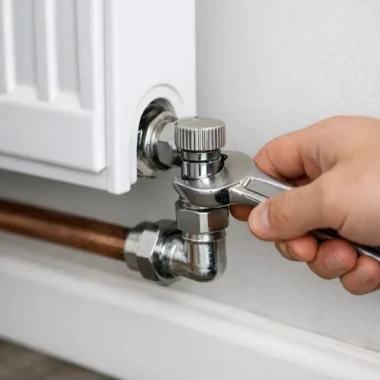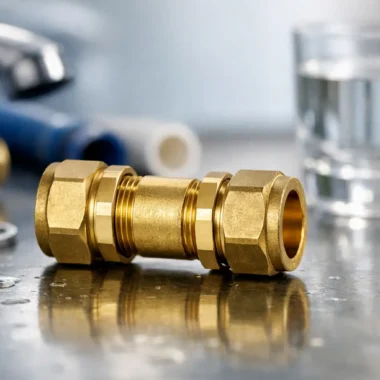
A towel rail can look straightforward until you need to order the valves. That is usually the point where measurements, pipe positions and radiator tappings start to matter. If you are comparing towel rail valve types, the right choice comes down to more than finish or price – it affects how clean the install looks, how easy the rail is to balance, and whether the valve body actually lines up with the pipework you have.
For trade installers, the decision is mostly about compatibility and fit. For homeowners replacing a bathroom radiator, the common mistake is buying on appearance alone and finding the valves sit proud, foul the wall, or do not suit the rail centres. Getting the valve type right first saves time on site and avoids awkward adaptor work later.
The main towel rail valve types
In practical terms, most towel rail valve types fall into three broad body styles – angled, corner and straight. You will also come across manual and thermostatic versions within those styles, plus decorative finishes for exposed bathroom installs.
The body style determines the direction the pipe enters and exits the valve. The control type determines how heat output is adjusted. Those two things are related, but they are not the same, and it is worth separating them before ordering.
Angled towel rail valves
Angled valves are probably the most commonly used option on UK towel rail installations. They are designed to connect pipework coming up from the floor and turn it into the side entry of the radiator or towel rail tapping.
They are a sensible choice where the pipes rise vertically beneath the valve positions. On many bathroom retrofits, this is the default arrangement. They also give a tidy enough finish without pushing the valve body too far out from the rail.
Where angled valves can catch people out is wall-fed pipework. If the pipes come out horizontally from the wall, an angled valve may work in some layouts, but often a corner valve gives a neater line and less visible body.
Corner towel rail valves
Corner valves are used where the pipework comes from the wall and needs a tighter, more compact connection into the towel rail. They are popular on modern bathroom installs because they keep the valve assembly tucked in close to the rail and can look cleaner when the pipe centres have been set accurately.
This style is often chosen for decorative installations where the pipework is exposed and symmetry matters. On chrome towel rails in particular, corner valves usually give a more deliberate, less bulky finish than angled valves.
The trade-off is tolerance. Corner valves tend to reward accurate first-fix work and punish poor pipe alignment. If the pipe tails are slightly off, you may have less room to disguise it neatly.
Straight towel rail valves
Straight valves are for situations where the pipe runs directly in line with the towel rail tapping. That usually means the pipework is coming out of the wall straight into the side of the valve, or less commonly rising from the floor in a way that matches the valve entry without a change in direction.
They are less common on standard bathroom towel rail replacements, but they are useful on certain layouts and bespoke installs. If the pipework and valve entry are already aligned, a straight valve avoids unnecessary turns and keeps the connection simple.
The key point with straight valves is not to force them into a job that really needs an angled or corner body. If the pipe needs to change direction, the wrong valve style will make the installation harder, not easier.
Manual vs thermostatic towel rail valve types
Once the valve body style is sorted, the next decision is whether you need manual or thermostatic control.
Manual valves
Manual valves are the simpler option. You open or close them by hand to control flow through the towel rail. In many bathrooms, especially where the rail is being used mainly for towel warming rather than precise room temperature control, manual valves are perfectly suitable.
They are straightforward to fit, generally more cost-effective, and often chosen where a separate room thermostat already manages the heating zone. On a like-for-like replacement, manual valves can also be the easiest route if the existing setup has worked well.
That said, a manual pair does not regulate room temperature automatically. If the bathroom tends to overheat or underperform, the valve itself will not compensate.
Thermostatic valves
Thermostatic radiator valves, often shortened to TRVs, adjust the flow automatically in response to room temperature. On a towel rail, that can improve control, particularly in bathrooms that get warm quickly or are part of a larger central heating circuit that benefits from balancing.
A typical setup uses one thermostatic valve on the flow side and one lockshield on the return. The TRV head senses ambient temperature and reduces flow as the room warms up. This can improve efficiency, although bathrooms need a bit of thought because the heat source is often serving both comfort and towel drying.
If the rail is your only heat emitter in the room, fitting a TRV may not always deliver the result the customer expects. Once the room reaches temperature, the valve can throttle back, which may leave towels less warm than expected. In some bathrooms that is fine. In others, especially where towel drying is the main priority, manual control may still be preferred.
There is also a safety and compliance point. A TRV should not be the only control on a system section where shutting down all radiator flow could create issues for the boiler or pump arrangement. System design matters, so valve selection should always reflect the wider heating setup.
Matching valve type to pipework
This is where most buying decisions are won or lost. Before choosing between towel rail valve types, check the pipe entry point, the towel rail tapping centres, the tail thread size and how much projection you can allow from the wall.
If the pipes come up from the floor, angled valves are usually the first option to consider. If the pipes come out of the wall and the goal is a close, neat finish, corner valves are often the better choice. If everything is already aligned in a straight run, straight valves may be appropriate.
Also check whether the rail uses standard BSP connections and whether valve tails are included. Most UK towel rails follow common sizing, but assumptions still cause delays. The wrong tail or union arrangement can turn a simple install into an extra parts chase.
Decorative finishes and exposed installs
In bathrooms, valves are often visible, so finish matters more than it would on a standard panel radiator behind furniture. Chrome remains the common choice because it pairs well with chrome towel rails, traps and brassware. Anthracite, black and brushed finishes are also used where the rail is part of a more deliberate bathroom scheme.
The practical point is to prioritise body style and dimensions before finish. A chrome corner valve that fits properly is useful. A premium finish in the wrong pattern is not. On exposed installs, even a few millimetres of extra stand-off can affect the final look.
Don’t forget the lockshield side
When buyers talk about towel rail valve types, they sometimes focus only on the visible control valve and overlook the return side. Most installations need a matching pair, with one control valve and one lockshield, unless a specific integrated set is being used.
The lockshield side is what allows balancing. On a multi-radiator system, that matters. A towel rail that heats too aggressively can rob flow from elsewhere, while one that barely warms may simply need proper balancing rather than a different valve type.
Common mistakes when ordering
The most frequent issue is choosing valves by appearance without checking pipe direction. After that, it is usually projection, thread compatibility or assuming a thermostatic head is always the better upgrade.
There is also a tendency on bathroom refurbishments to underestimate spacing. Tiles, adhesive build-up and rail brackets can all influence the finished position. If the valve body is too deep or the pipe centres are tight, the install can end up looking forced.
For trade buyers, the quickest route is to work backwards from the pipework and rail dimensions, then choose the valve pattern and control type that actually suit the job. For competent DIY installers, that same approach prevents most ordering errors. Suppliers such as Mepstock are useful when you need the spec detail clearly laid out rather than buried behind generic product names.
Which towel rail valve type is best?
There is no single best option across all jobs. Angled valves suit many floor-fed bathroom installations. Corner valves are often the cleanest answer for wall-fed towel rails. Straight valves are more situational but ideal where the run is already aligned. Manual valves keep control simple, while thermostatic valves offer more automatic regulation where the system design supports it.
The best choice is the one that fits the pipework cleanly, matches the heating setup, and gives enough adjustment for a proper install. Measure first, check the valve pattern properly, and the rest of the job usually gets much easier.
If you are ordering for a bathroom job and want to avoid a second delivery, treat valve selection as part of the installation plan rather than an accessory decision.