
A leaking joint on a finished job usually comes down to one of three things – the wrong fitting, the wrong pipe, or the wrong assumption. When you are weighing up brass compression fittings: what to choose and why, the answer is rarely just “pick the right size”. Material quality, pipe compatibility, approval standards and access for future maintenance all matter.
Compression fittings remain a standard choice across domestic and light commercial plumbing because they are quick to install, require no hot works, and suit repairs as well as new pipe runs. They are especially useful where a torch is awkward, where pipework may need to be altered later, or where you are tying into existing systems with mixed materials. But not every brass compression fitting is interchangeable in practice, even if the thread or pipe size looks right.
Brass compression fittings: what to choose and why on site
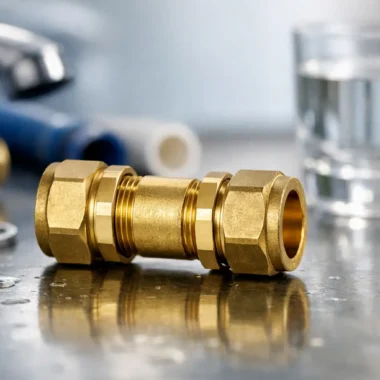
The first decision is the application. A straight coupling on potable water pipe has a different job from a reducing set on a heating circuit, and both differ again from a service valve connection feeding an appliance. Brass compression fittings work by compressing an olive onto the pipe as the nut is tightened, creating a mechanical seal. That makes them forgiving in some situations, but only if the fitting matches the pipe material, outside diameter and service conditions.
For most UK plumbing work, brass is chosen because it is durable, machinable and well suited to water systems. It tolerates routine installation knocks better than lighter alternatives and gives a reliable threaded body for repeated tightening. In practical terms, that means fewer problems when making final adjustments or replacing connected components later.
What you choose depends on four things: pipe type, fitting pattern, approval requirements and access. If even one of those is off, you may end up with a joint that technically goes together but is not suitable for the job.
Start with the pipe, not the fitting
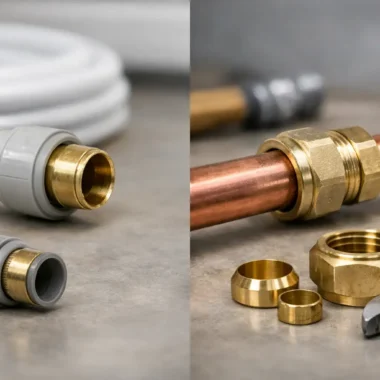
This is where many selection problems start. Copper, PEX, PB and MDPE all behave differently under compression. A 15 mm brass compression coupling intended for copper may physically sit on plastic pipe, but that does not make it a correct installation. Plastic systems often require a pipe insert, and some manufacturers specify their own fittings or tightening methods.
With copper tube, standard brass compression fittings are a familiar option for repairs, valve changes and exposed pipework. The pipe wall gives enough support for the olive to bite correctly, and installation is straightforward if the pipe is cut cleanly, deburred and fully inserted.
With plastic pipe, the fitting choice needs more care. You need to confirm compatibility with the pipe material and use the correct insert where required. Overtightening is a common issue here. Plastic can deform, and a joint that feels secure during installation may become unreliable under temperature cycling.
For MDPE and other external water supply applications, standard indoor brass compression fittings are not the default answer. Those jobs usually call for purpose-made MDPE compression fittings or transition fittings designed around the pipe dimensions and service conditions.
Choose the right fitting pattern for the job
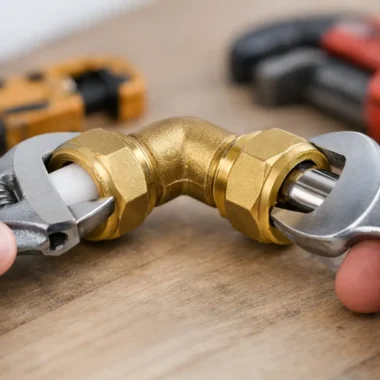
The fitting shape matters just as much as the size. Straight couplings are fine for extending or repairing a run, but they are not a substitute for a proper stop end, tee, elbow or reducing coupling. Using the wrong pattern to make do often creates strain on the pipework, especially in tight cupboards, behind appliances or under boilers.
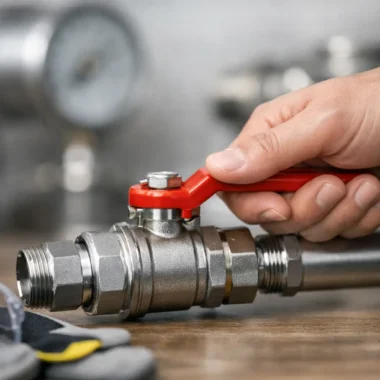
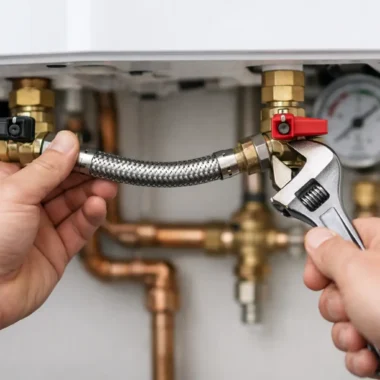
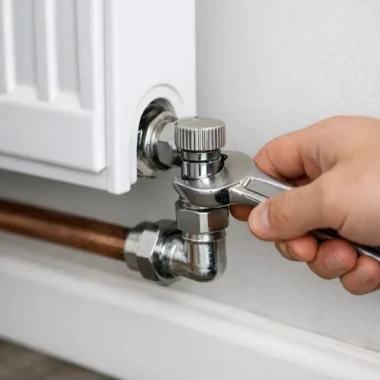
A few common examples explain the difference. An elbow is the right option where the direction change is fixed and space is tight. A tee is for branching, not for improvised offsets. A reducer is for changing between pipe sizes without forcing one side to adapt badly. A service valve with compression ends is useful where future isolation matters, particularly on taps, toilets, appliances and maintenance-heavy parts of the system.
If the joint may need to come apart later, a compression fitting often makes more sense than a permanent alternative. That is one reason they are widely used around valves, cylinders, pumps and controls. The trade-off is that compression joints need correct assembly and sensible access. Burying them where they cannot be inspected is rarely the best plan unless the product and installation standard specifically allow for it.
Sizes, threads and the usual mistakes
In UK plumbing, the common pipe sizes are familiar enough – 10 mm, 15 mm, 22 mm and 28 mm on many domestic and heating jobs. But problems start when buyers mix up compression size, thread size and appliance connection size.
A 15 mm compression x 1/2 inch BSP fitting is not the same thing as a 15 mm equal compression fitting. The pipe side and threaded side each need checking. The same applies to tap connectors, flexible hoses, radiator valves and appliance isolation points. If one side is compression and the other is male or female BSP, both interfaces must be right.
Reducing sets are another detail worth checking properly. If you are adapting a larger fitting to a smaller pipe, make sure the reducer is intended for that fitting body and that the resulting assembly still suits the application. Improvised combinations can hold pressure at first and still be poor practice.
Why quality brass matters
Two fittings with the same nominal size can perform very differently. Machining quality, thread consistency, nut depth and olive fit all affect how the joint goes together. Poorly made fittings are more likely to bind, misalign or require excessive force to seal.
For trade work, quality brass compression fittings save time because they tighten predictably and fit the pipe as expected. They also reduce the chance of call-backs caused by minor weeps that only show up after pressure changes or temperature swings. On a small repair the price difference may look minor. Across repeat jobs, labour and revisit costs matter more than the pennies saved on a weak fitting.
Where potable water is concerned, approval standards should also be part of the buying decision. If a fitting needs to meet WRAS-related requirements or project specifications, check that before the order goes in. It is easier to buy once than swap out installed components because the paperwork does not match the job.
Olives, inserts and sealing compounds
A brass compression fitting is only as good as the parts assembled with it. Standard brass olives are common and suit many copper applications. In some cases, copper olives are preferred because they can deform differently and may help where a joint needs remaking carefully. It depends on the fitting body, the pipe material and installer preference.
On plastic pipe, inserts are often essential. They support the bore and help the olive compress without crushing the pipe. Miss the insert and the joint may fail even if everything else looks fine.
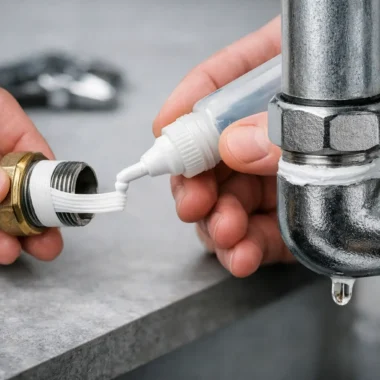
Jointing compounds divide opinion. Many installers use a suitable non-setting compound sparingly on olives to assist sealing, particularly on older pipe or remedial work. Others prefer dry assembly on new, clean components. The key point is not to rely on paste to rescue a bad cut, scored pipe or mismatched fitting.
Where brass compression fittings are the better choice
Compression fittings are a sensible option where speed and serviceability matter. That includes alterations to existing copper systems, connections to valves and controls, first-fix and second-fix repairs, and areas where draining down and hot works would be inconvenient.
They are also useful for competent DIY buyers doing straightforward maintenance, because they do not require specialist pressing tools or soldering equipment. That said, they still need proper preparation. A square cut, deburred pipe and controlled tightening matter more than brute force.
The main trade-off is size and visibility. Compression fittings are bulkier than some alternatives, and they are not always the neatest answer where appearance is critical or where space is extremely limited. For concealed runs or high-volume installation work, other systems may be faster or more suitable depending on the spec.
How to choose with fewer delays
The quickest way to get the right brass compression fitting is to check the full connection detail before ordering: pipe size, thread size, pipe material, application and any approval requirement. If the fitting is part of a wider assembly, check the mating component as well, not just the pipe.
For repeat work, it makes sense to standardise where possible. Keep to fitting types and sizes you use regularly, stock common valves and couplers, and avoid mixing incompatible system parts unless the transition is deliberate and properly specified. That is where a specialist supplier with clear technical categories helps. Mepstock, for example, is built around that practical way of buying – fast identification, trade-relevant stock and fewer guesswork purchases.
Brass compression fittings are not difficult products, but choosing well is about more than diameter. Match the fitting to the pipe, the joint to the job, and the quality to the risk of having to return. If a fitting is going into a place you do not want to revisit, that is usually your answer right there.