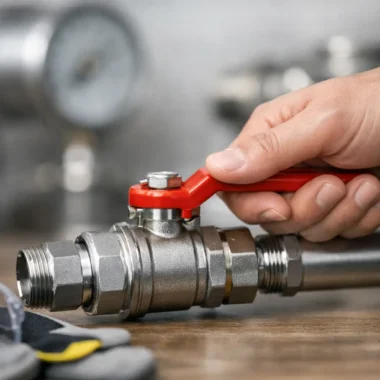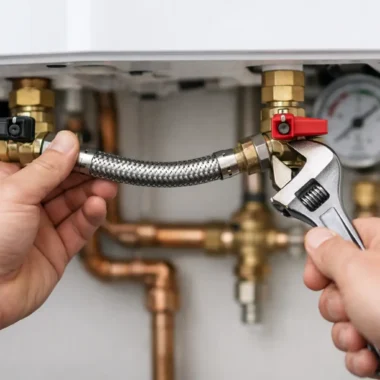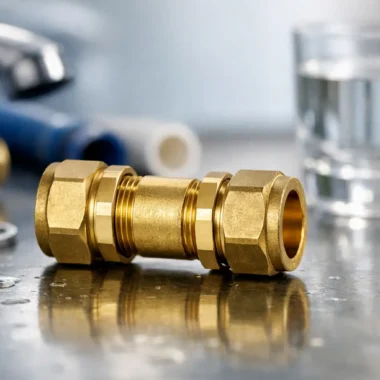

On a first fix or a quick maintenance call, the small details usually cause the hold-up. A butterfly handled valve red & blue handle setup is one of those parts that looks simple on the shelf but still needs the right call on size, connection type and application. Get it right and isolation is quick, obvious and reliable. Get it wrong and you end up with awkward access, poor shut-off or a valve that does not suit the pipework in front of you.
What a butterfly handled valve red & blue handle is actually for
In practical terms, this type of valve is there to isolate flow on hot and cold water lines with a handle that is easy to identify at a glance. Red normally denotes hot, blue denotes cold. That matters on domestic plumbing, commercial maintenance and plant room work alike, particularly where more than one installer may need to trace pipe runs or shut down part of a system quickly.
The butterfly handle itself is chosen for compact operation. Where there is limited clearance in a boxing, under a basin, behind an appliance or near closely spaced pipe runs, a butterfly handle can be easier to work with than a long lever. You still get a quarter-turn action on most ball valve patterns, but without the sweep of a full lever handle.
That said, compact does not always mean best. If access is poor and the user is wearing gloves or working in a cramped service void, a larger lever can offer better grip. The right choice depends on who will be operating the valve, how often it will be used and how much room there is around it.
Where red and blue handled valves make most sense
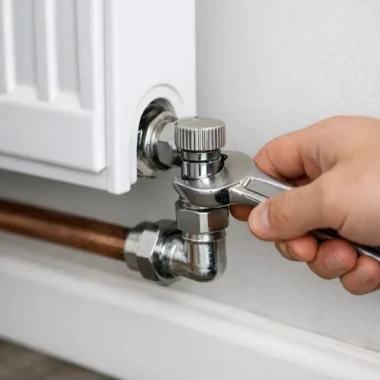
These valves are common where hot and cold supplies sit side by side and clear identification saves time. Under sink installations are the obvious example, but they are also useful on wash basin feeds, WC supply arrangements, utility rooms, appliance feeds and small plant installations.
For maintenance teams, the red and blue handle arrangement is not just about appearance. It reduces guesswork. On fault finding, draining down or replacing a tap, being able to identify the hot and cold isolation points immediately keeps the job moving. For landlords, facilities teams and anyone managing repeat property maintenance, standardising that approach across multiple properties can also make later servicing easier.
In domestic settings, competent DIY buyers often choose them because they are easy to understand. In trade settings, the benefit is speed and clear system layout. Neither point is complicated, but both matter when time on site is tight.
The main things to check before you buy
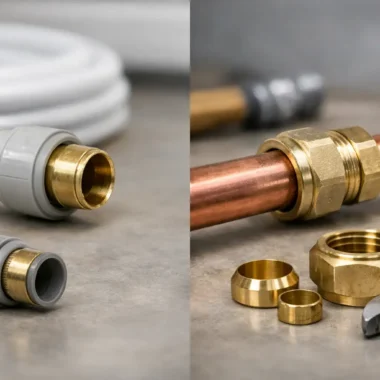
The first point is the connection. A valve might be compression, threaded, push-fit compatible or designed for another specific jointing method. If you are matching into existing copper, plastic or mixed pipework, the connection type needs to suit the rest of the installation. Adapters can solve a problem, but they also add joints, space requirements and cost.
The second point is size. Most buyers are looking at standard domestic sizes, but that does not mean one valve fits all. Always check the actual pipe size and the valve bore. A full bore option generally gives better flow and less restriction, which can matter more on feeds where pressure and delivery rate are already marginal.
Material and approval also matter. Brass body valves are common for good reason, but finish, seal quality and compliance should still be checked. Where the valve is being used on wholesome water systems, product suitability is not something to leave vague. On any potable water installation, proper specification is worth the extra attention.
Then there is pressure and temperature rating. Hot water duties can expose weak points faster than cold services, so the red handle is not simply a colour marker. It should sit on a valve that is actually suited to the job.
Butterfly handle vs lever handle
A butterfly handle is usually the better fit where space is restricted and the valve is there mainly for local isolation rather than frequent daily operation. It keeps the profile compact and avoids the issue of a lever handle fouling pipe clips, cabinet sides or adjacent valves.
A lever handle, however, tends to be easier to operate where more force is needed or where the valve may sit unused for long periods between operations. If a property maintenance team is looking for the most obvious and glove-friendly shut-off option, lever valves still have their place.
So if the deciding factor is tight installation space, the butterfly pattern is often the sensible choice. If visibility and ease of grip are more important than compactness, a lever can be the better answer. It depends on the installation rather than the catalogue image.
Best applications for a butterfly handled valve red & blue handle
Under-basin and sink feeds are probably the most common use because these points often need compact valves that can be clearly split into hot and cold. The same applies to bidet and WC supply arrangements where neighbouring pipework leaves little room.
They also work well on appliance feeds where isolation is required but the valve cannot project too far into the available space. In utility cupboards and service risers, the colour coding helps with tracing and servicing, especially when multiple water lines run close together.
For heating installers, it is worth saying that red and blue handled isolation valves for domestic water services should not be treated as interchangeable with every heating circuit requirement. System conditions, fluid type and temperature range must still be checked. Not every valve that looks right is specified for every duty.
Fitting considerations on site
Valve orientation is usually straightforward, but access for operation needs just as much thought as access for installation. A compact butterfly handle only helps if it can still be turned cleanly once the surrounding pipework, clips and covers are in place.
Avoid positioning the valve where the handle ends up hard against a wall, joist or cabinet frame. It is a common enough issue on rushed installs. The valve may technically fit, but if quarter-turn operation is compromised, it is not properly serviceable.
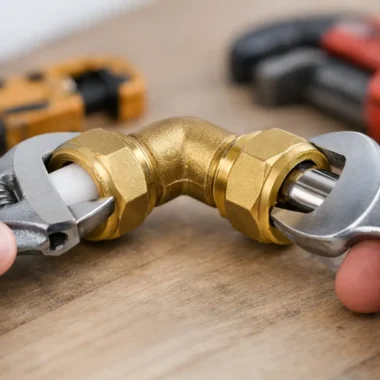
Take care not to overtighten compression joints, especially where space encourages awkward spanner angles. A sound joint matters more than brute force. On mixed-material systems, make sure olives, inserts and compatible components are being used correctly.
If the valve is intended as a local isolation point for later servicing, install it where it can actually be reached without removing half the unit. This sounds basic, but it is one of the details that separates a fast future repair from a frustrating one.
Common buying mistakes
The most frequent mistake is assuming all quarter-turn isolation valves are broadly the same. They are not. Bore, connection type, body quality and operating clearance all change how the valve performs in practice.
Another common issue is buying on handle colour alone. A red and blue set may suit the visual requirement, but the actual valve spec still needs to match the system. That includes temperature range, pressure suitability and whether the materials are appropriate for potable water use.
Buyers also sometimes overlook the difference between a valve intended for occasional isolation and one likely to see more regular use. If a caretaker, tenant or maintenance operative is expected to use it with any frequency, ease of operation should be part of the decision.
Choosing for trade work vs one-off domestic repairs
For trade buyers, consistency often matters as much as unit price. Using the same style of butterfly handled valve red & blue handle across repeat jobs can speed up installation, reduce call-backs and make stockholding simpler. If you are managing multiple properties or regular bathroom and kitchen work, standardising around dependable valve patterns saves time over the long run.
For one-off domestic repairs, the priority is usually matching what is already there and getting the system back into service without delay. In that case, availability, connection compatibility and confidence in the valve specification will matter more than maintaining a standard product range.
That is where a specialist supplier such as Mepstock fits the job well. When you need to identify the right valve quickly, clear technical naming and practical stock depth matter more than browsing through generic hardware listings.
When this valve type is the right choice
If you need compact quarter-turn isolation, clear hot and cold identification and a straightforward fit within typical UK domestic water services, this valve style is often the right answer. It is especially useful where space is limited and service access still needs to be maintained.
If the installation calls for larger bore performance, easier grip, specialist heating duty or a more exposed operating position, another valve pattern may suit better. That is not a flaw in the butterfly design. It just means valve selection should follow the system, not the other way round.
A good valve choice rarely gets noticed after the job is finished, and that is usually the point. If the handle colour makes identification instant and the valve shuts off cleanly when needed, it has done exactly what it should.