If a gas installation is held up because one fitting, one jaw profile or one section of pipe is wrong, the time saving disappears quickly. That is why press fit gas fittings are chosen for speed, but checked for compatibility first. On live jobs, the right answer is not simply what presses fastest – it is what fits the pipe, matches the system and meets the application.
Why press fit gas fittings are used
On domestic and light commercial work, press systems reduce installation time compared with traditional jointing methods. There is no hot works permit to think about, no waiting for joints to cool, and less disruption in occupied properties. That matters on boiler changes, meter alterations, plant room modifications and tight retrofit work where access is limited.
The appeal is practical rather than theoretical. A consistent pressed joint can help keep the job moving, especially where multiple connections are needed in awkward positions. For installers managing programme pressure, that can make a real difference.
That said, speed is only one part of the decision. Gas systems are not forgiving of poor preparation. Press systems depend on the correct fitting design, the correct pressing tool and jaw, proper insertion depth, clean pipe ends and the manufacturer’s installation method being followed exactly.
Where press fit gas fittings make sense
Press fit gas fittings are commonly used on copper or stainless steel gas pipework, depending on the system specification. They suit first fix and second fix work where repeatable jointing is useful, and they are especially practical on projects where flame-free installation is preferred.
In refurbishment work, that can be a major advantage. Working in finished homes, managed buildings or commercial premises often means reducing risk, dust and disruption wherever possible. A press system helps with that, but only if the installer already has the right tooling on hand and knows the system being used.
If the job is a one-off repair with only a couple of joints, the cost of tooling may outweigh the time saved. That is one of the main trade-offs. For regular installers, press systems can earn their place very quickly. For occasional use, the sums are not always as clear.
What to check before ordering press fit gas fittings
The first check is system approval. Gas press fittings must be suitable for gas applications, not just general plumbing use. Water press fittings and gas press fittings are not interchangeable unless the manufacturer states that the product is approved for both services.
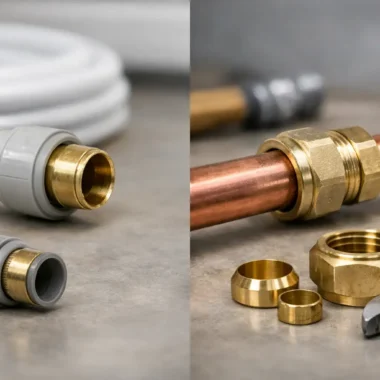
The second check is material compatibility. Copper press fittings need to match the pipe specification they are designed for, while stainless steel systems follow their own product rules. Mixing systems casually is where problems start. A fitting that looks right is not the same as a fitting that is approved.
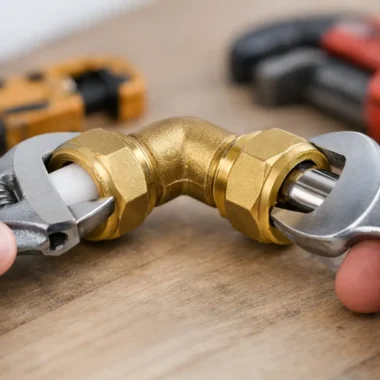
The third check is profile compatibility. Different manufacturers use different jaw profiles, and not every tool and jaw combination suits every fitting range. Before buying, confirm the press profile required and whether your existing tool setup matches it. This is one of the most common causes of wasted time because the issue is often only spotted on site.
Pipe size is the next obvious point, but it still catches people out. Check imperial versus metric where relevant, check wall thickness requirements, and check whether reducers, couplers, elbows or tees are from the same approved system. On gas work, small assumptions can create expensive delays.
The installation details that matter most
A press joint is quick to make, but preparation still does the hard work. Pipe ends need to be cut cleanly, deburred correctly and inserted to the marked depth. If the pipe is not fully seated, the joint is compromised before the tool is even lifted.
Cleanliness matters as well. Dirt, damaged pipe ends or scoring can affect sealing surfaces. Installers used to working quickly know this already, but press systems reward methodical prep. The saving is in the jointing time, not in skipping the basics.
It also matters that the fitting is pressed once, with the correct jaw and the correct cycle. Reworking a badly executed joint is not the aim. Following the system instructions from the start is faster than trying to recover a mistake later.
Gas tightness testing and commissioning remain part of the job. A pressed system does not remove the need for proper testing, purging and sign-off in line with current regulations and manufacturer guidance.
Gas approvals are not a box-ticking exercise
With press fit gas fittings, approvals are central to product selection. The fitting needs to be intended for gas service, and the full system should be installed in accordance with UK requirements and the manufacturer’s instructions. For trade buyers, this is not paperwork for its own sake. It is what protects the job, the installer and the end user.
Competent DIY buyers also need to be realistic here. Gas work in the UK is tightly controlled for good reason. Buying the right component is only part of the process. Suitability, compliance and safe installation all matter more than convenience.
For that reason, product descriptions should be read closely. Material, size, application, approvals and fitting type need to be clear before the order is placed. Specialist suppliers such as Mepstock are useful here because the product range is built around technical identification rather than vague consumer naming.
Common buying mistakes
The most common mistake is assuming all press fittings work the same way. They do not. Systems vary by seal material, profile, pipe material and application approval. If a fitting has been selected based on appearance alone, there is a good chance something important has been missed.
Another frequent issue is forgetting the full fitting list. Installers may order the obvious tees and couplers, then realise they still need a transition fitting, a valve connection or the correct union arrangement to complete the run. On jobs with tight timescales, that extra order can be more expensive than the fitting itself.
There is also the problem of buying for availability rather than specification. A substitute part that arrives next day is no help if it is not approved for the system in front of you. Fast delivery is valuable, but only when the product is correct.
Choosing between press and traditional jointing
This is where the answer depends on the job. Press systems are strong on speed, consistency and reduced hot works concerns. Traditional methods still have their place where tooling access is poor, where installers are already set up for alternative jointing methods, or where only a very small amount of work is involved.
Cost is part of that decision. Press fittings can carry a higher unit cost than some traditional options, and the tool investment is a factor. Against that, labour time can be lower, especially across larger installs or repeat work. For firms doing regular gas pipework modifications, the balance often shifts in favour of press.
Access can also decide it. In some ceiling voids, risers and service cupboards, the ability to make a joint quickly without flame is a genuine operational advantage. In others, tool clearance for the pressing operation may be the limiting factor. Knowing the site conditions matters as much as knowing the catalogue.
Buying with fewer site delays
When sourcing press fit gas fittings, it helps to think in system terms rather than single part terms. Check the pipe material, fitting range, profile, sizes, approvals and any related valves or transition components before ordering. That reduces the risk of part-ordering the job and finding the missing piece when the engineer is already on site.
Clear product data is what saves time here. Size, connection type, application and compatibility should all be visible up front. For trade accounts, that is not just convenient – it improves ordering accuracy and makes repeat purchasing easier when the same components are used across multiple jobs.
If there is any uncertainty over profile or suitability, it is better to stop and confirm than to guess. Gas installations are not the place for near enough.
Press fit gas fittings can be an efficient choice, but the real gain comes from getting the specification right before the van is loaded. When the fitting, pipe, tool and approval all line up, the job tends to do the same.