A water press fit system can save serious time on site, but only if every part of the job lines up – pipe material, fitting profile, jaw compatibility, approval status and access around the joint. Get one of those wrong and the speed advantage disappears quickly.
For plumbers, heating engineers and maintenance teams, that is usually the real question. Not whether press fit works, but whether it is the right choice for this install, this pipe run and this timescale. For competent DIY buyers, the same logic applies. A press connection is straightforward in principle, but it still needs the correct system components and proper preparation.
What a water press fit system actually does
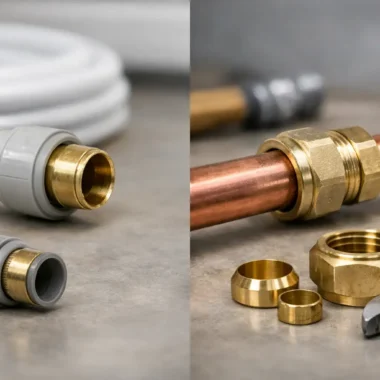
A water press fit system uses a mechanical pressing tool to compress a fitting onto pipe, creating a permanent joint. In water applications, that usually means copper or stainless steel pipework paired with fittings that contain a sealing element designed for potable water or heating circuits, depending on the product specification.
The main appeal is obvious on busy jobs. You are not introducing a flame, waiting for solder to flow, threading pipe, or relying on compression joints across long runs where repeated tightening can slow the work down. Press fit can be faster, cleaner and more consistent, especially on larger installations or refits where downtime matters.
That said, speed is only part of it. The bigger advantage on many jobs is control. In occupied buildings, commercial plant rooms, schools, flats and care settings, avoiding hot works can make planning much simpler. Less permit admin, less fire watch, and fewer site restrictions can matter just as much as the minutes saved per joint.
Where a water press fit system makes most sense
The strongest case for a water press fit system tends to be made on repeatable installation work. Domestic first fix pipework, heating circuit upgrades, cylinder changes, booster sets and commercial refurbishments all suit press fit well when pipe routes are clear and the installer already has the tooling.
It is also useful where access is awkward but not impossible. If you can get the pressing jaw around the fitting, a pressed joint can be much easier than trying to solder neatly in a confined space. Loft spaces, service risers and boxed-in runs often fall into that category.
Where it may be less attractive is on one-off small jobs if you do not already own or hire the right tool. For a single repair, the economics can shift. Compression or another approved connection method may be more practical, particularly for occasional users.
The checks that matter before you buy
The biggest source of delay with press fit is not the pressing itself. It is ordering the wrong combination of pipe, fitting and tooling profile. A few checks up front save a lot of wasted time.
Pipe material and size
Start with the pipe. Confirm whether the system is intended for copper, stainless steel or another specified material, and confirm the exact size required. Nominal size assumptions cause problems, especially when older systems have mixed materials or previous alterations.
A fitting may look right in the van or on the bench and still be wrong for the pipe on site. Outside diameter, wall thickness tolerance and manufacturer guidance all matter. If the product range is designed around specific pipe standards, stick to them.
Press profile and tool compatibility
Not every fitting works with every jaw profile. This is one of the most important checks in any water press fit system. If your tools are set up for one profile and the fitting requires another, you do not have a workaround – you have a mismatch.
Trade buyers usually know this, but on fast ordering jobs it is still easy to miss. Check the fitting specification, check the jaw set you already carry, and confirm that your pressing tool is rated for the fitting size range. On larger diameters, tooling requirements can change again.
Seal material and application
The sealing element inside the fitting is not just a small detail. It determines suitability for potable water, heating circuits and temperature range. Water system fittings should be selected for the intended service conditions, not just because the dimensions match.
If the job calls for drinking water compliance or a specific approval standard, verify it before ordering. The same goes for temperature and pressure ratings. A tidy-looking joint is not enough if the product is not approved for the duty.
Approval status
For many UK installations, approval and compliance are not optional extras. WRAS approval can be a key requirement depending on the application and specification. For contract work, maintenance portfolios and landlord jobs, having the right product approval in place avoids awkward questions later.
This is where buying from a specialist supplier helps. Clear technical naming, stated approvals and visible product specifications make it much easier to source correctly without ringing around three trade counters.
Installation quality still decides the result
A water press fit system reduces some common variables, but it does not remove workmanship from the equation. Good preparation still matters.
Pipe ends need to be cut square, deburred properly and inserted to the correct depth. If the pipe is damaged, out of round or contaminated, the fitting will not rescue it. Marking insertion depth is basic practice, but it is also one of the easiest things to skip when the job is moving quickly.
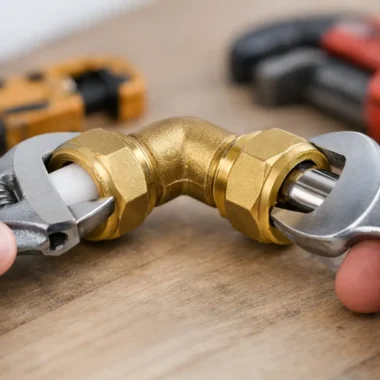
Alignment matters too. Press fit is not there to pull poorly set pipework into place. If the run is under tension before pressing, the finished joint may still be carrying unnecessary stress. On straight, well-supported runs, press systems are efficient and tidy. On rushed, misaligned pipework, they are not magic.
Press fit compared with soldered and compression joints
For water installations, there is no single best connection method in every setting. Press fit, solder and compression all still have their place.
Compared with soldered joints, press fit is faster and avoids hot works. That is a major advantage in occupied buildings or sites with strict permit controls. Soldering can still be a sound choice for installers who are set up for it and working on smaller domestic jobs where access is good and hot works are not an issue.
Compared with compression fittings, press fit usually offers better speed on larger runs and a more consistent workflow once the tool is in hand. Compression remains useful for repairs, alterations and situations where demountability or low initial tooling cost matters more than install speed.
The practical answer is often job-dependent. If you are fitting out multiple bathrooms, replacing plant room sections or working to a tight programme, press fit can justify itself quickly. If you are replacing one valve or modifying a short section of pipework, the calculation may be different.
Stocking the right fittings for fewer call-backs
For trade buyers, choosing a water press fit system is not just about the current install. It is also about what you can keep standard across future work. Consistency in fittings, reducers, couplers, elbows, tees and valve connections makes van stock more useful and repeat ordering quicker.
That matters more than it sounds. The fewer system variations you carry, the lower the risk of site confusion and the easier it is to restock accurately. It also helps if you need next day delivery to keep a job moving. A supplier with clear sizing, approval detail and category structure saves time because you can identify the exact fitting rather than browsing around for something that looks close enough.
For buyers using specialist online supply, that speed of identification is part of the value. Mepstock, for example, is built around product-specific navigation rather than vague merchandising, which suits installers who already know the size, material and fitting type they need.
Common mistakes with water press fit systems
Most problems come back to specification and preparation rather than the fitting design itself. The common errors are using the wrong jaw profile, mixing incompatible system components, failing to deburr pipe correctly, pressing on damaged pipe, or overlooking the product approval required for the job.
Another one is assuming all press systems behave the same way. They do not. Different product lines can vary on application, sealing element, pipe compatibility and tooling requirements. If you are switching between systems, check the detail each time rather than relying on habit.
Buying for domestic versus commercial work
Domestic buyers often focus first on ease of installation and neatness, which is fair enough. But even in houses and flats, the same technical checks apply. Water quality approval, heating circuit suitability and fitting compatibility still matter.
Commercial and maintenance buyers usually have an extra layer to think about – programme time, downtime, site access rules and repeatability across multiple properties. In those cases, a water press fit system often earns its place because it reduces disruption and keeps installation methods standard across teams.
If the job has a clear specification, stick to it. If it does not, choose on the basis of compatibility, approval, tooling you already hold, and how often you are likely to use the system again.
A good press fit setup pays for itself when it keeps jobs moving, avoids avoidable returns and gives you confidence that the fitting you ordered is the fitting you need. That is usually the difference between a fast install and an expensive delay.