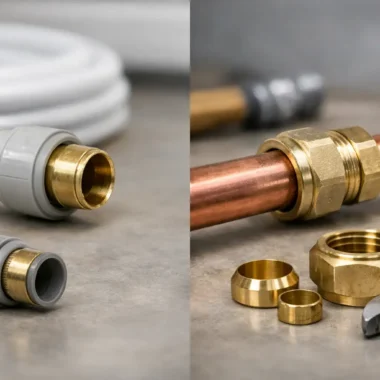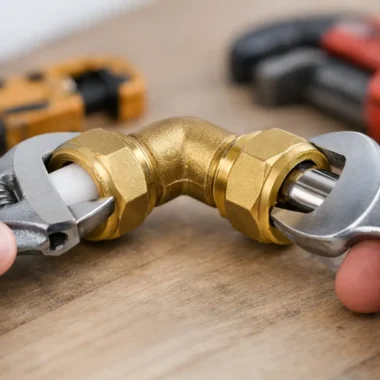

A copper endfeed pipe fitting is still the straightforward choice on plenty of UK plumbing jobs. When you need a compact, reliable joint on copper tube, endfeed fittings give you a neat soldered connection without the bulk of compression nuts or the cost of more specialised systems.
What a copper endfeed pipe fitting actually is
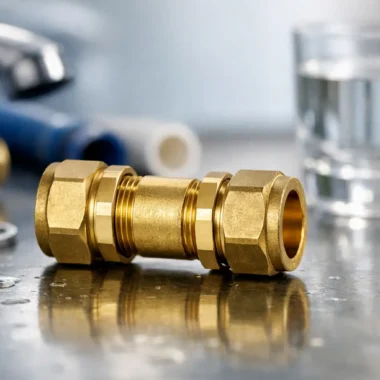
An endfeed fitting is a copper fitting designed to accept copper tube directly into each socket end. Once the pipe is cleaned, fluxed and inserted fully, heat is applied and solder is drawn into the joint by capillary action. That is what creates the seal.
In practical terms, it is a simple system. You have copper pipe, a fitting with formed sockets, and solder. Because there are no olives, nuts or press sleeves, the finished connection stays compact. That matters in floor voids, airing cupboards, service risers and any location where space is tight.
You will see copper endfeed pipe fitting products across the usual patterns – couplers, elbows, tees, reducers, stop ends and tank connectors. The principle is the same across the range, but choosing the right pattern and size at the start saves time on site and avoids cutting back pipework later.
Why endfeed fittings are still widely used
For many installers, endfeed remains the best option when appearance, size and material cost all matter. The fittings are generally more economical than compression alternatives, especially across larger first-fix and second-fix runs. On visible pipework, the finished result is also tidier.
There is a performance advantage in the compact profile as well. In tight chases or boxed-in sections, a smaller fitting body can make routing easier. If you are working around joists, cylinders, valves or closely spaced branches, that extra room is often worth having.
That said, endfeed is not the answer for every job. If you are working in a hot works restricted environment, near sensitive finishes, or on a repair where draining down fully is difficult, another fitting type may be the better call. A clean, dry pipe is important for a sound soldered joint. Water in the line will quickly turn a simple connection into a frustrating one.
Common uses for a copper endfeed pipe fitting
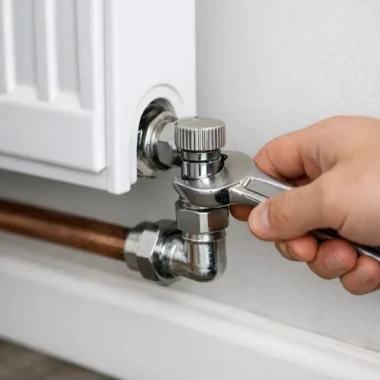
Copper endfeed fittings are used across domestic and light commercial plumbing systems for hot and cold water distribution, heating pipework and general copper tube alterations. On radiator circuits, cylinder connections and branch additions, they are a familiar option because they suit standard copper tube sizes and produce a durable joint when installed correctly.
They are also a sensible choice where the pipework will remain visible. A soldered copper elbow or tee looks cleaner than a larger mechanical fitting, which is why many installers still prefer endfeed on surface-mounted runs in utility areas, boiler cupboards and plant spaces.
Where the job involves frequent disassembly, though, endfeed is less convenient. Compression fittings have the edge if you expect future removal or adjustment. Endfeed is more permanent by design.
Sizes and fitting patterns to look for
In UK plumbing, the most common endfeed sizes are 10mm, 15mm, 22mm and 28mm, with larger sizes available for more demanding applications. Domestic work is usually centred on 15mm and 22mm, with 10mm seen on some microbore heating systems and 28mm used on higher flow sections.
The fitting pattern matters just as much as the size. A standard coupler handles straight joins, an equal tee creates a branch of the same diameter, and a reducing tee or reducer coupler helps you transition between pipe sizes cleanly. Elbows are available in common angles including 90 degree and 45 degree forms, and stop ends are useful for capping a line permanently.
Before ordering, check whether the job needs a plain endfeed fitting or a more specific item such as a female iron connector, male iron connector or tank connector. The wrong pattern can delay a simple install more than the wrong quantity.
Getting the joint right
A copper endfeed pipe fitting is only as good as the preparation behind it. Soldering itself is the quick part. The work that decides whether the joint holds is cutting, cleaning, deburring and keeping the pipe dry.
Start with a clean, square cut. Remove burrs so the pipe inserts properly and water flow is not restricted. Clean both the outside of the pipe and the inside of the fitting socket back to bright metal, then apply an appropriate flux sparingly. Push the tube fully home so the fitting sits in the correct position before heat is introduced.
When heating, the goal is to warm the joint evenly rather than blasting one point. Once the fitting reaches the right temperature, the solder should be drawn into the socket. If the pipe is dirty, oxidised or damp, capillary action will not behave as it should. That is usually where failed joints begin.
Overheating is another common issue. Too much heat can burn off flux, oxidise the metal and make solder flow poorly. On a busy day, especially in awkward locations, it is easy to rush this stage. It rarely pays off.
Endfeed vs compression – which is better?
This usually comes down to the job rather than the product. Endfeed is neater, more compact and often better value on material cost. Compression is quicker where hot works are impractical and gives you a demountable joint.
If you are running new copper pipework with clear access and proper control over the system, endfeed often makes sense. If you are carrying out a repair in an occupied property, dealing with residual water, or working where a flame is a poor idea, compression may be the safer route.
There is also the question of installer preference. Some tradespeople are faster and more confident with soldered systems, while others will choose compression for flexibility. Neither approach is automatically right in every setting. The priority is a compatible fitting, a sound installation method and a finish that suits the environment.
What to check before you buy
Specification errors are what hold jobs up. Before ordering any copper endfeed fitting, confirm the tube size, fitting pattern, quantity and application. On larger jobs, it is worth checking the whole run rather than buying piece by piece. Missing one reducing tee or one stop end can stall a full installation.
Material compatibility matters too. Endfeed fittings are intended for copper tube systems, and that sounds obvious, but mixed-material alterations are common on older properties. If the existing installation includes plastic, threaded brass, compression adaptors or legacy sizes, make sure the transition point has been planned properly.
Where approval or compliance is relevant, check whether the product specification meets the standard required for the job. Professional buyers already know that not all fittings are interchangeable just because the nominal size matches.
Stocking the right fittings for repeat work
For plumbers and maintenance contractors, copper endfeed fittings are the kind of line that pays to keep on the van or in the stores. A core stock of 15mm and 22mm couplers, elbows, equal tees, reducers and stop ends covers a large share of everyday callouts and planned work.
The benefit is not only speed on site. It also reduces the temptation to make do with an awkward fitting because the correct part is not to hand. Clean, planned pipework is usually the result of having the right range available from the start.
That is one reason trade buyers tend to use specialist suppliers such as Mepstock for fittings and connection products. The value is in finding the exact size and pattern quickly, with clear product naming and practical availability rather than wasting time across multiple sources.
When not to use copper endfeed fittings
There are jobs where endfeed is simply not the best fit. If the pipe cannot be drained properly, if the work area has strict no-flame rules, or if the joint may need to be undone later, another fitting type will often be more sensible.
It is also worth being realistic about access. In a cramped position where cleaning and heating the joint properly is difficult, a theoretically tidy endfeed connection can become a poor installation choice. The better fitting is the one you can install correctly first time.
A good copper endfeed pipe fitting gives you a compact, dependable joint and a clean finish, but only when the surrounding conditions suit it. Match the fitting to the job, not just the pipe size, and the rest of the installation usually goes far more smoothly.